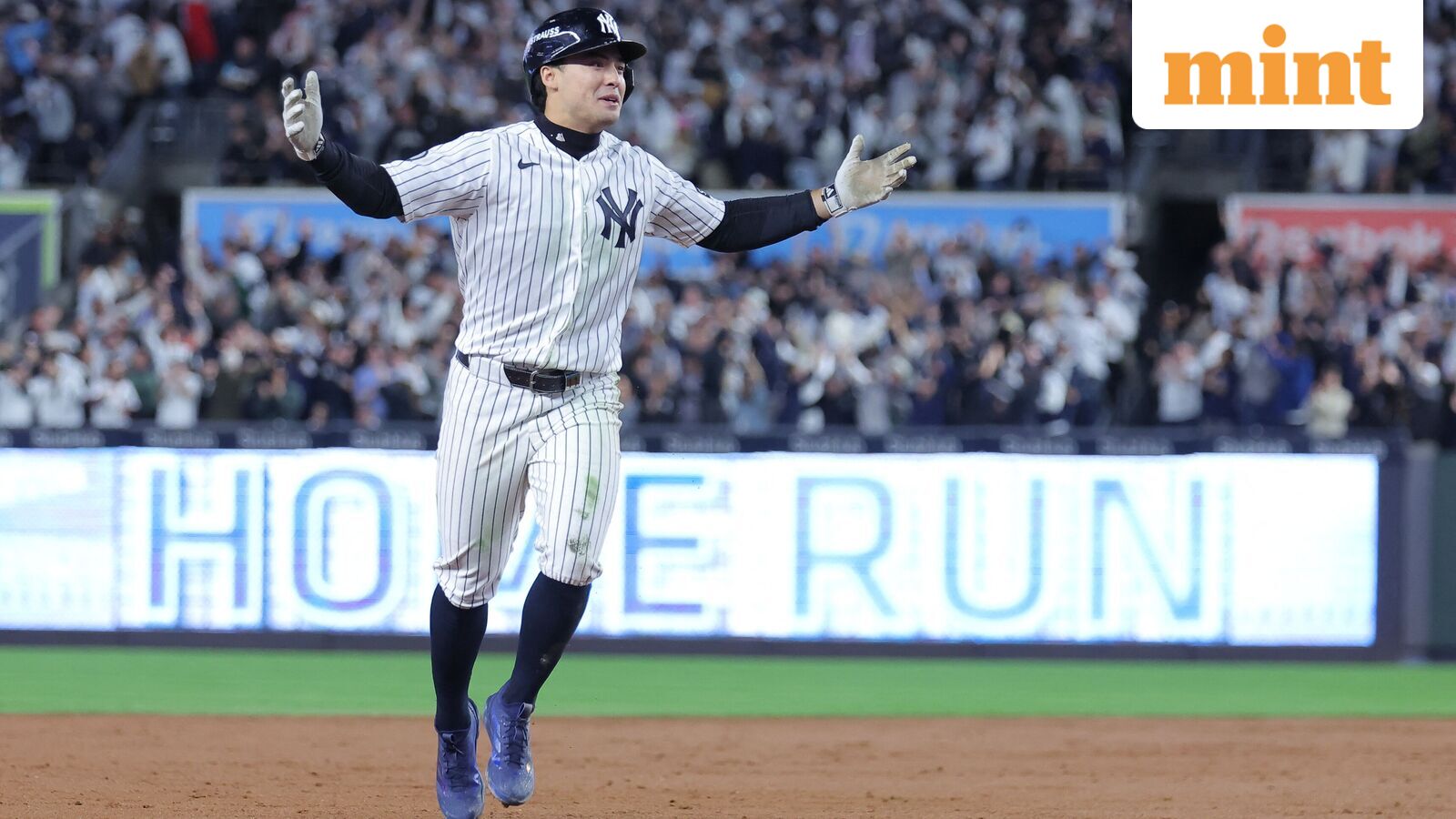
A would-be tying swing from Anthony Volpe never reached the seats in the sixth inning of American League Division Series (ALDS) Game 3 at Yankee Stadium. Fan interference turned the New York Yankees second baseman’s long fly into a run-scoring double, and the Tampa Bay Rays held a 4-3 lead that ended the night and the series.
Why was Anthony Volpe’s home run overturned?
George Lombard Jr was on first when Anthony Volpe lifted the ball to left. A wind off right field seemed to carry it toward the wall. Tampa Bay Rays left fielder Victor Mesa Jr. drifted back and jumped near the fence. The ball vanished into the crowd, Yankee Stadium roared, and the play was first ruled a two-run homer that would have tied the game.
Mesa immediately asked for a look. The umpires met on the infield and sent the play to crew review. Video showed a fan in a navy blue Yankees jacket reaching beyond the fence and into the field of play. The ball hit his hands and bounced into the stands.
Rays third baseman Junior Caminero waved his arms as the clip played, as if calling the homer off himself. Volpe stood through the wait with everyone else. “Just hoping for the best,” he said. “Crazy.”
What did replay and Major League Baseball decide?
Crew chief Dan Bellino told the crowd that interference had been called. The announcement drew a wave of boos. Bellino then said Mesa would not have caught the ball. Replay awarded the run to Lombard and placed Volpe at second with a double. Instead of 4-4, the Rays still led 4-3. That is how the game finished. Tampa Bay swept the best-of-five series and moved on to the American League Championship Series.
Major League Baseball’s interference rule leaves that placement to the umpires. “After viewing all relevant angles, the Replay Official definitively determined the spectator interfered with the ball over the field of play,” MLB said in a statement. “The ball would not have left the playing field nor would it have been caught. The call was overturned, there was spectator interference and no home run. Additionally, the Replay Official scored one run and placed the batter-runner at 2B.”
Security and police escorted the fan out of Yankee Stadium. Play stopped again when fans in left threw debris onto the field.
Did both sides agree with the call?
“It was interference,” Mesa said in Spanish. “I believe I might have even been able to get to that ball. Not that it matters whether we won or lost. Well, it’s in the past now. I think they could have even called an out, because I was right there. Everything happens for a reason. It was kind of an in-between call.”
Players and managers on both benches mostly agreed with the final ruling. “I thought they got it right,” New York skipper Aaron Boone said. “When he hit it, to my eye looking out there, I was a little concerned right away because it felt like something. I wasn’t sure. And then seeing the replay and seeing it unfold, I thought they did the right thing.”
Rays manager Kevin Cash said the scoring fit what his staff saw. “I don’t know if he would have caught it or not caught it, the guy would have scored or not. Our replay official Nick [Rogers] said the runner had passed second base at the point where the ball hit the fan’s wrist or hand, and it makes sense why they awarded him home.”
How does this compare with the Jeffrey Maier play?
The play sits next to an older Yankees postseason memory. In the 1996 playoffs, young fan Jeffrey Maier reached over Baltimore Orioles right fielder Tony Tarasco on a Derek Jeter fly. Right-field umpire Rich Garcia ruled no interference. Manager Davey Johnson and Tarasco argued that Tarasco would have caught it. There was no replay review then, and Jeter’s homer stood.
This time the review stuck, and so did the loss. “I mean, we lost,” Volpe said of Wednesday’s call. “That’s what we’re dealing with now. That’s just what happened.”
#Anthony #Volpe #home #run #overturned #fan #interference #Rays #complete #ALDS #sweep #Yankees
