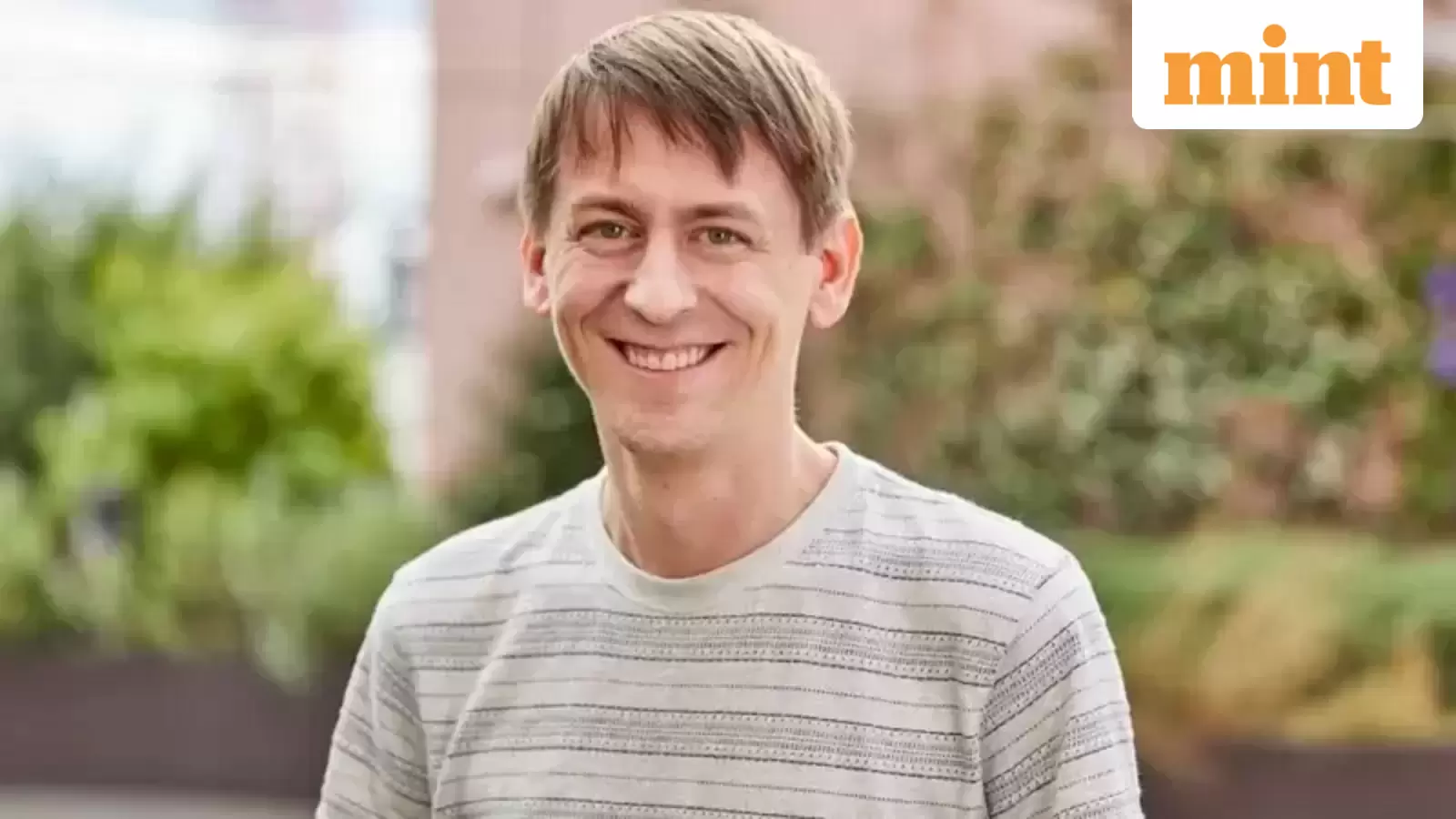
John Jumper, the Vice President at Google DeepMind who shared the 2024 Nobel Prize in Chemistry with chief executive Demis Hassabis for building AlphaFold, announced on Friday that he is leaving the company to join Anthropic after nine years, becoming the third senior DeepMind researcher to depart in as many months and revealing that his final stretch at Google had been spent on AI coding tools rather than the scientific work that won him a Nobel.
Nine years on: an unlikely exit for John Jumper
John Jumper confirmed the move in a post on X, framing it as the end of a long chapter rather than a clean break. “After nearly 9 years, I have decided to leave Google DeepMind and join Anthropic (after taking some time to recharge). I am incredibly grateful for my time at GDM. Demis Hassabis took a real chance letting me lead the AlphaFold team just six months after finishing my PhD, and the entire GDM team taught me so much about how to do great science. GDM is a special place, and I’ll still be excited to hear about what amazing things they discover next.”
John Jumper was handed the AlphaFold team barely half a year after completing his doctorate, and went on to lead the system that can predict a protein’s three-dimensional structure directly from its amino acid sequence, a tool now credited with more than 200 million protein structure predictions that have cut months, and sometimes years, off biological research.
Science to software: a quiet shift
Before his departure, John Jumper had moved away from frontier science work and onto Google’s AI coding development team, according to a Bloomberg report, at a time when Google has been trying to close the gap with Anthropic, OpenAI and other rivals in selling AI coding tools to businesses.
The shift places a Nobel laureate’s final Google posting some distance from the protein research that made his name, and underlines how thinly stretched Google’s research priorities have become as the company fights on multiple fronts at once.
Farewell note: gratitude, not grievance
Hassabis responded publicly, crediting AlphaFold with reshaping expectations of what AI could do for science.
“What we achieved with AlphaFold changed the world, and showed the field what was possible with AI for science and medicine, lighting the way for how AI can benefit humanity,” he wrote, a tribute that echoed the warmth of Jumper’s own post rather than any sense of acrimony.
Three exits, one quarter: talent drain
Jumper’s move is the third high-profile departure from Google DeepMind in a matter of months. Days earlier, Noam Shazeer, co-lead of Google’s Gemini model and a co-author of the 2017 paper that introduced the transformer architecture underpinning most modern AI systems, announced he was leaving for OpenAI, less than two years after Google paid a reported $2.7 billion to bring him back from Character.AI.
“I’m excited to share that I’ll be joining OpenAI and look forward to working with the exceptional team there,” Shazeer wrote, adding that “it was a difficult decision to move on” and that he was “incredibly proud of the amazing team at Google.”
Before that, David Silver, the lead researcher behind AlphaGo, AlphaZero and MuZero, left DeepMind to found his own venture, Ineffable Intelligence, which is pursuing reinforcement learning approaches to superintelligence rather than large language models.
Anthropic’s hiring spree: Karpathy joins too
John Jumper’s hire extends a run of marquee additions to Anthropic through 2026. In May, Andrej Karpathy, a co-founder of OpenAI and former head of AI at Tesla, joined the company from his own start-up, Eureka Labs, to build a team focused on using Claude to accelerate Claude’s own pretraining research.
“I think the next few years at the frontier of LLMs will be especially formative. I am very excited to join the team here and get back to R&D,” Karpathy wrote at the time.
John Jumper has not said what his role at Anthropic will be, only that he plans to take time off first. The moves come as Anthropic and OpenAI both prepare for prospective public listings, intensifying competition between Silicon Valley’s biggest AI labs for the small pool of researchers capable of working at the frontier.
AGI timeline: ‘a few years away’
The departure comes days after Hassabis, DeepMind’s chief executive, used a fireside chat at the Stanford Graduate School of Business, posted online on Tuesday, to argue that humanity has little time left to prepare for the arrival of artificial general intelligence, defined as AI capable of matching or exceeding human performance across cognitive tasks.
Demis Hassabis put a rough date on the milestone. “Maybe 2030, plus or minus a year, which is astounding to think, really. I think that will be such an enormous transformative technology; it’s gonna effectively be a new human era,” he said, likening its arrival to a singularity, a threshold past which there is no turning back.
New human era: preparing for AGI
Demis Hassabis, whose comments place him among a cohort of frontier AI executives including OpenAI’s Sam Altman and Anthropic’s Dario Amodei in warning that society has a narrow window to adapt, said some peers in the industry had become “way too certain” in their own predictions. He nonetheless pointed to the potential for AGI to drive medical breakthroughs and economic transformation, raising the prospect of a “post-scarcity world.”
He urged students in both the humanities and STEM fields to “lean in” to the technology rather than resist it. “Society needs to hear that because we don’t have long to prepare for what that means,” he said.
Demis Hassabis closed by framing the coming years as a genuine fork in the road rather than a fixed outcome. “The future, in my view, is still to be written, but these next few years are going to be very critical as to which way that will go and how we collectively want that to look like,” he said.
#Google #DeepMind #loses #Nobel #laureate #John #Jumper #Anthropic #senior #researcher #depart #months
