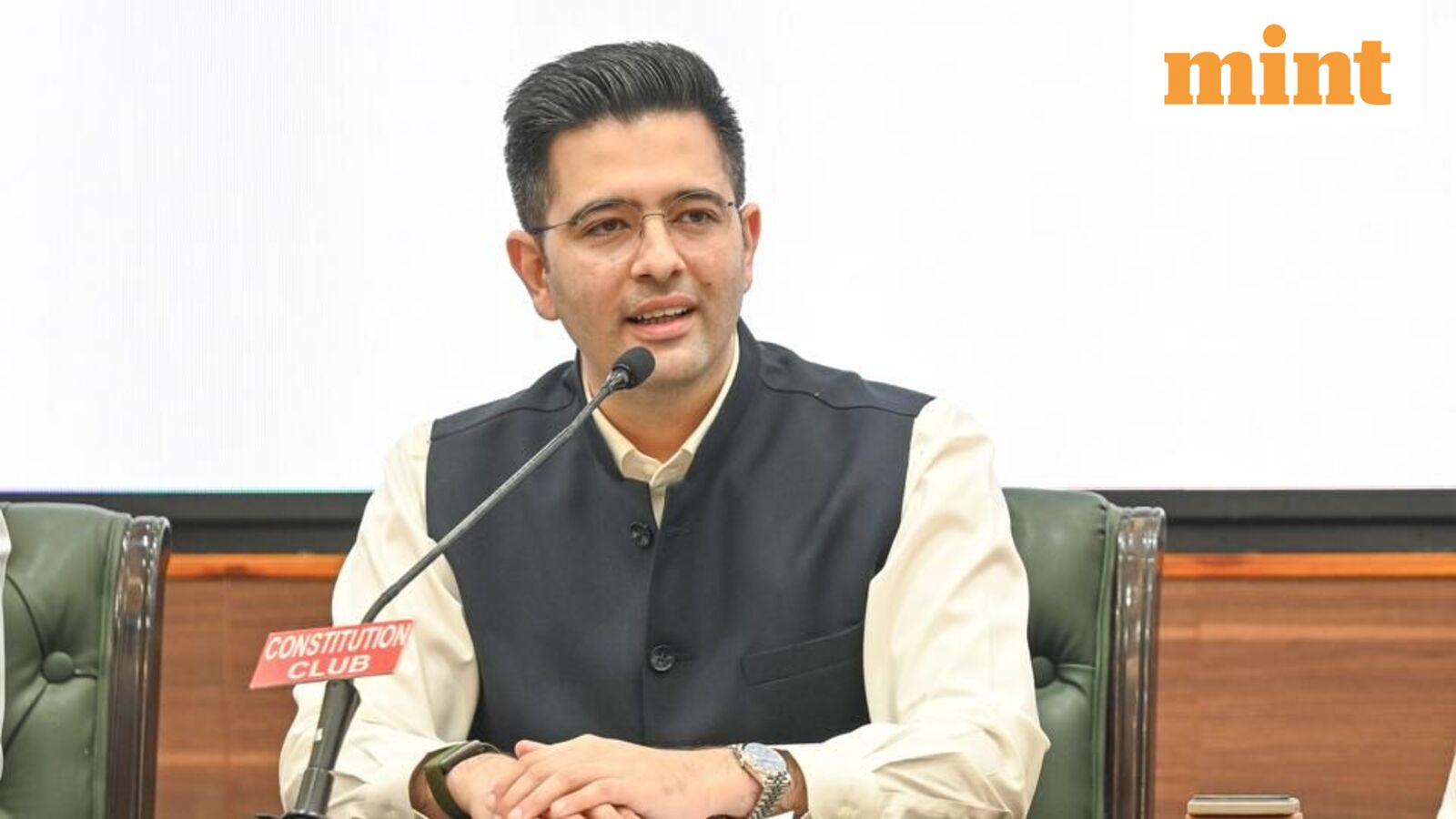
In his first public remarks after switching sides, Raghav Chadha on Monday mounted a sharp critique of the Aam Aadmi Party (AAP), arguing that the exit of multiple MPs reflected systemic issues rather than individual dissent. “One man can be wrong, two people can be wrong, but seven people cannot be wrong,” he said as per news agency ANI report, signalling a deeper rupture within the party.
Raghav Chadha Exit from AAP: “Toxic Work Environment” Allegation Explained
In a self-recorded video statement, Chadha described his departure as the culmination of years of growing unease within the party.
“I didn’t come into politics to build a career. I became a founding member of a political party. I gave 15 years of my prime youth to this party,” he said.
He alleged that the party’s internal culture had deteriorated significantly:
“But today, this party is no longer the same old party. Today, there’s a toxic work environment in this party. You are stopped from working. You are stopped from speaking in Parliament.”
Why Raghav Chadha Left AAP: Key Reasons Behind Switch to BJP
Chadha said that decision-making had become concentrated among a small group, distancing the organisation from its original ethos.
“For the last few years, I felt that perhaps I’m the right man but in the wrong party,” he said.
He outlined three options he had considered—quitting politics, staying to reform the party internally or joining another platform—before ultimately choosing to join the BJP.
7 AAP MPs Join BJP: Full List and Political Impact in Rajya Sabha
Chadha was joined by six other MPs—Sandeep Pathak, Ashok Mittal, Harbhajan Singh, Rajinder Gupta, Vikramjit Singh Sahney and Swati Maliwal—marking a significant shift in parliamentary numbers.
Following approval by the Vice President of India, C P Radhakrishnan, the BJP’s strength in the Rajya Sabha has risen to 113, while the AAP has been reduced to just three members.
AAP vs BJP: Rajya Sabha Numbers After Raghav Chadha Defection
The numerical shift is expected to strengthen the BJP’s legislative position in the Upper House, potentially easing the passage of key bills.
For the AAP, the loss of two-thirds of its MPs represents a major setback, both symbolically and strategically.
Anti-Defection Law Explained: Can AAP MPs Be Disqualified?
The controversy has triggered a constitutional challenge led by Sanjay Singh, who has petitioned for the disqualification of the defecting MPs.
The plea cites provisions of the Tenth Schedule, particularly Paragraph 2(1)(a), which deals with voluntary resignation from a political party.
However, Paragraph 4 provides an exception in cases where at least two-thirds of members merge with another party—a condition that appears to have been met in this instance.
Political Reactions: AAP Calls It ‘Betrayal’, BJP Welcomes Leaders
The defections have triggered sharp political reactions. AAP leaders have described the move as a betrayal of public trust, while the BJP has welcomed the MPs, presenting the shift as evidence of growing support.
Chadha, however, framed the decision as collective and principled: “One man can be wrong, two people can be wrong, but seven people cannot be wrong.”
What This Means for Indian Politics and Future Alliances
The episode highlights ongoing tensions around internal party democracy, leadership structures and the functioning of India’s anti-defection law.
It also raises broader questions about political mobility and ideological consistency in a rapidly shifting electoral landscape.
#Raghav #Chadha #attacks #AAP #BJP #switch #cites #toxic #environment #people #wrong
