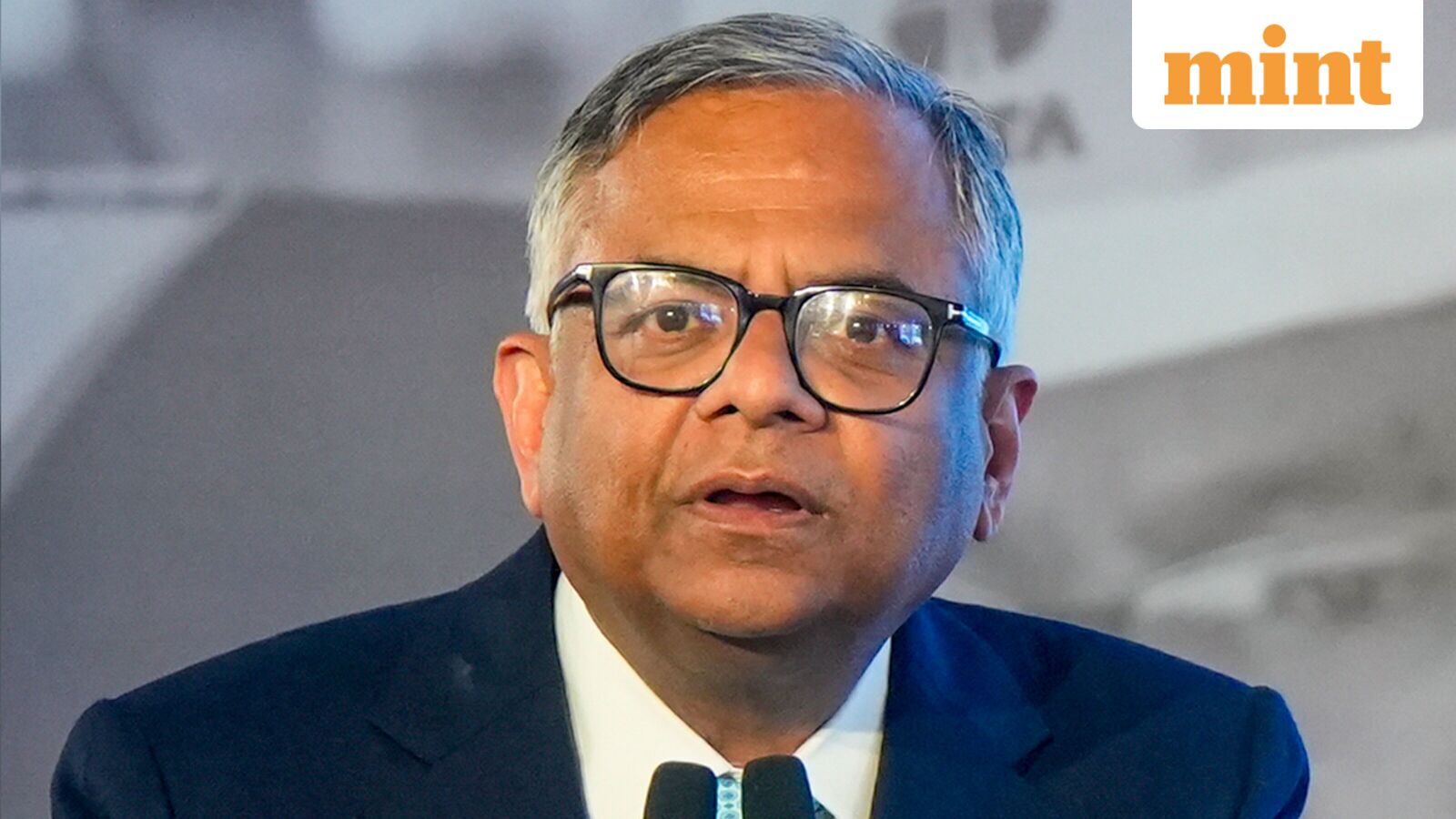
N Chandrasekaran will step down as Tata Sons chairman when his current term ends on February 20, 2027, bringing an end to months of uncertainty over his possible reappointment while also highlighting differences with Tata Trusts chairman Noel Tata.
Chandrasekaran, 63, informed the Tata Sons board on Wednesday that he would not seek another term and urged directors to identify his successor soon to ensure a smooth leadership transition.
The decision follows a six-month impasse over his proposed five-year extension. According to PTI, the prolonged deadlock was linked to differences between Chandrasekaran and Noel Tata over the future direction and governance of the Tata Group.
What led to the deadlock?
Quick answers to key questions
•5 QUESTIONS
N Chandrasekaran decided to step down due to a six-month deadlock surrounding his proposed five-year extension, primarily stemming from unresolved differences with Tata Trusts chairman Noel Tata.
Despite their disagreement, Tata Sons’ operations continued without being brought to a standstill, with effective management discussions focusing on critical businesses and operations.
The relationship is significant as it highlights differing visions for the group’s strategic direction, affecting governance and future leadership decisions amid ongoing critical projects.
The board’s inability to support Chandrasekaran’s reappointment stemmed from a lack of unanimous approval among its members, with at least one board member withholding support.
Chandrasekaran’s exit could lead to a more cautious approach towards capital allocation and investment strategies within the Tata Group, as discussions around financial discipline and project prioritization intensify.
Chandrasekaran said the Sir Dorabji Tata Trust and Sir Ratan Tata Trust, which together hold 51.54% of Tata Sons, had unanimously recommended a five-year extension of his tenure.
The proposal was subsequently backed by the Tata Sons Nomination and Remuneration Committee and recommended by the board before being placed before directors at a meeting on February 24, 2026.
However, the proposal failed to secure unanimous support, with one board member withholding approval. Chandrasekaran did not identify the director.
“However, the proposal was not carried through because one of the Board Members did not support it, and in the absence of unanimous support, I chose to defer the decision,” Chandrasekaran said in a statement.
Six months later, no resolution had been reached. Chandrasekaran said the uncertainty had become unsustainable, particularly as Tata Sons was overseeing several strategic projects at critical stages.
Dispute between Chandrasekaran and Noel Tata
According to PTI, Noel Tata sought greater clarity from Chandrasekaran on the group’s five-year strategic roadmap, the handling of losses at newer businesses and options for providing an exit to the Shapoorji Pallonji Group without taking Tata Sons public.
Noel Tata also sought clarity on Chandrasekaran’s position on the long-discussed possibility of listing Tata Sons, PTI reported.
Chandrasekaran was reportedly unwilling to commit that Tata Sons would never pursue a public listing, making the potential IPO one of the key differences between the two sides.
The two also differed over issues relating to board representation and capital allocation, according to reports cited by PTI.
Tata Sons is the principal holding company and promoter of the Tata Group and oversees more than 30 companies, including Tata Consultancy Services, Tata Motors and Air India. Tata Trusts collectively own about 66% of Tata Sons, giving the philanthropic arm significant influence over the group’s governance.
Did the differences affect Tata Sons’ functioning?
Despite the disagreement over Chandrasekaran’s reappointment, the differences did not bring the Tata Sons board to a standstill.
According to people familiar with the deliberations cited by PTI, a Tata Sons board meeting in May was constructive. Noel Tata focused on businesses including Air India and BigBasket, while Chandrasekaran led reviews of the group’s operating companies.
However, the leadership question remained unresolved.
Chandrasekaran said the lack of clarity could no longer continue, given the scale of Tata Sons and the number of strategic projects underway.
“It is not only necessary to have a leader in place to lead the Group beyond February 2027, but also clarity on leadership is important for employees, investors, partners and other stakeholders,” he said.
Why does Chandrasekaran’s exit matter?
Chandrasekaran’s departure marks the end of a nearly nine-year tenure during which the Tata Group significantly expanded its presence in aviation, electronics, semiconductors, batteries and digital commerce.
He joined the Tata Group in 1987 as an intern at TCS and became the IT company’s chief executive in 2009. He was appointed Tata Sons chairman in 2017, succeeding an interim arrangement led by Ratan Tata following the ouster of Cyrus Mistry.
During his tenure, the group acquired Air India from the government in 2022 and subsequently consolidated its airline businesses. Tata Digital expanded into e-commerce and digital healthcare, while Tata Electronics emerged as a key vehicle for the group’s semiconductor and electronics ambitions.
The group also pursued portfolio consolidation and expanded its listed businesses, including through the listings of Tata Technologies and Tata Capital.
But Chandrasekaran’s tenure also faced challenges. Air India continued to face scrutiny over its operations and service, while the fatal crash of an Air India Boeing 787 in Ahmedabad in June 2025 became one of the most serious crises during his tenure.
Newer businesses have also required significant investment, while Jaguar Land Rover has faced pressure and Tata’s technology businesses have had to navigate the disruption caused by artificial intelligence.
#Chandrasekaran #exit #Tata #Sons #months #deadlock #wrong #Noel #Tata
