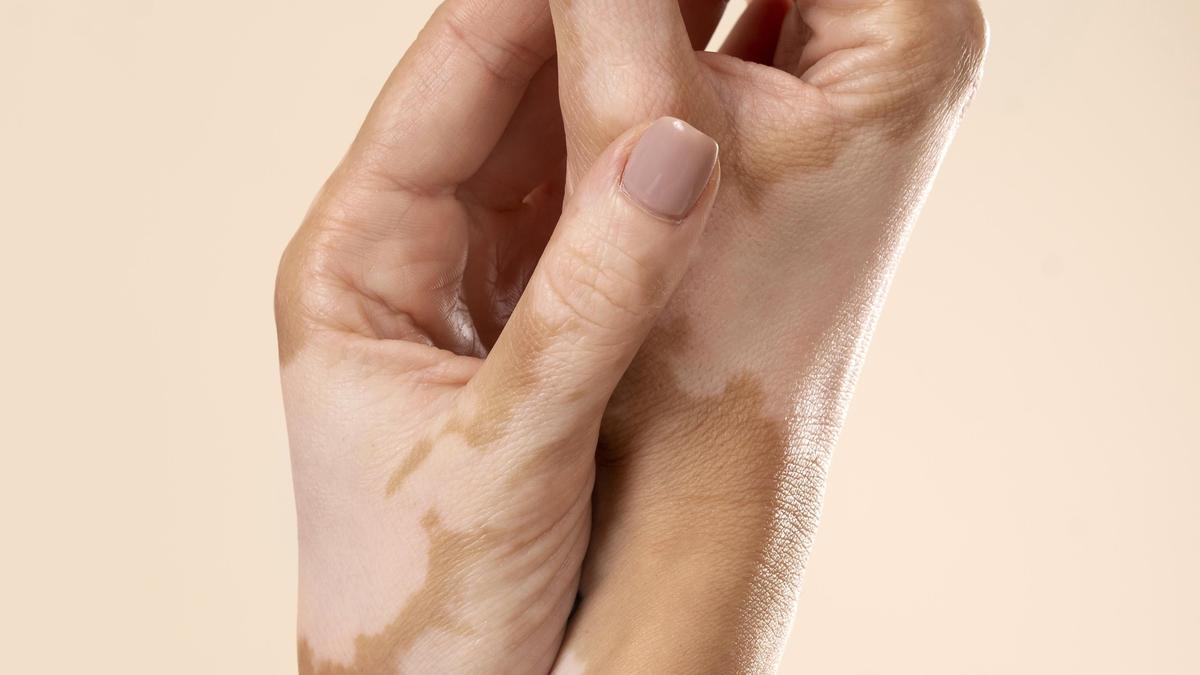
A chronic autoimmune skin condition in which the body’s immune system mistakes melanocytes (cells which produce melanin, giving colour to your skin, hair and eyes) as enemies and attacks them. This leads to patches of depigmentation anywhere in your body. This condition is known as vitiligo.
Types of vitiligo
The main types of vitiligo are non-segmental and segmental vitiligo.
Non-segmental vitiligo is the most common form, where colour loss appears symmetrically on both sides of the body, such as both hands or both knees. Segmental vitiligo, on the other hand, often starts at a younger age and affects only one side or a single specific area of the body.
What causes vitiligo?
While the primary reason for vitiligo is not fully understood, it is seen to be caused by various factors, from genetics to immune dysfunction.
Research has shown that vitiligo is primarily a T-cell–mediated autoimmune disease where CD8+ cytotoxic T cells attack and destroy skin pigment cells called melanocytes, leading to white patches on the skin.
Having a family member with vitiligo or other autoimmune diseases is shown to have an increased risk, suggesting shared genetic susceptibility. Environmental factors like oxidative stress, skin trauma, and certain chemicals can sometimes trigger or worsen vitiligo in genetically susceptible people.
Vitiligo is also often associated with other autoimmune conditions, especially autoimmune thyroid disease, so clinicians may screen for these in some patients.
Symptoms of vitiligo
The main symptom of vitiligo is depigmentation and the appearance of patches on your body. This can be anywhere from your face and hands to your knees or feet. Hair in the affected area may also turn white.
There are various ways through which doctors can help you diagnose vitiligo and determine what type of vitiligo you may have. One major examination done is the Wood’s lamp examination, where ultraviolet light is used to distinguish vitiligo from other hypopigmented conditions.
Treatment options
Treatment for vitiligo is mostly connected to re-pigmentation, or slowing progression, depending on the type of vitiligo and patient preference rather than a guaranteed cure.
There are various types of topical treatments (like creams for external use) which can often help with inflammation, as well as medical light treatments like narrowband UVB phototherapy and excimer laser or lamp. Availability of certain treatments also changes from country to country and by the patient’s age group. There are situations where oral medication is also used for the short term. People with stable vitiligo can also consider surgical options if other treatments are not working, and depigmentation therapy if a major part of the person’s natural pigmentation is lost.

Prarthana Jagan
| Photo Credit:
Special Arrangement
In conversation with Prarthana Jagan and Sameeha Mariam!
As someone who developed vitiligo at the age of 11, digital creator Prarthana Jagan started putting out content on social media around 10 years ago.
“It started as a small white patch on my forehead and gradually spread to my eyelids and eyelashes, then towards my nose, the top of my lip, and also inside my lip. Mine is a segmental type of vitiligo, so it only appears on the left-hand side of my face, and I only have it on my face,” Prarthana said.
From the age of 11 to 19, Prarthana used to hide my vitiligo using camouflage makeup while seeking multiple types of treatment. “When I was a teenager, I used to cover my vitiligo with a lot of makeup. I didn’t show it to anyone at school. No one really knew I had vitiligo. They probably just thought I was really bad at applying makeup!” Prathana reminisced.
A common rule in most schools, makeup was forbidden in class, and even with special permission, Prathana had to undergo moral policing and was pulled up for breaking rules. However, Sameeha said the challenges she had to face were mostly from an odd comment or two on social media.
“I’m going to tell you what I would have told my younger self. Yes, you can hide behind makeup. You can hide by covering yourself and shutting yourself down. But at the end of the day, the world is already quite brutal and poisonous in nature. I hope you can make your mind your safe space. That should be your safe space. And in order to do that, you have to stop hiding,” said Prarthana when asked what advice she wants to give the young readers.
Sameeha Mariam, on the other hand, was around 22 when she was diagnosed with segmental vitiligo.
“I think framing an experience as a positive experience for yourself will always go a long way, whether it’s about vitiligo or any other thing. Just positively reframing things that you experience in life will make life so much more enjoyable. This applies to everything,” adds Sameeha.
Published – September 29, 2026 05:11 pm IST
#Understanding #vitiligo #Hindu
