India survived a massive scare during their first-ever T20I against Japan on Tuesday, as the three-time T20 World Cup winners pulled off a thrilling two-run win in a match that was reduced to five overs-a-side due to inclement weather at the Sano International Cricket Ground.
Opting to bat first on a surface that had moisture and offered more than expected turn, the Indian batters struggled, and managed just two boundaries in the innings, losing four wickets in the process. In the end, the Men in Blue managed a meagre 32 runs.
In reply, seasoned spinners Axar Patel and Washington Sundar choked the inexperienced Japanese batters just in time. Sundar was the pick of the Indian bowlers with two wickets and conceded 13 runs as Japan’s innings ended at 30/3 in five overs. However, it was a controversial wide ball in the final over bowled by Axar that grabbed the headlined.
What happened in the final over?
Needing eight runs in the final over, the left-arm spinner kept it tight with just a single in the first two deliveries. He bowled a wide next, and followed it up with another extra – wide. It was the second wide ball that is making all the noise. Bowling round the wicket to Alexander Shirai-Patmore, Axar pitched the ball down the leg-side.
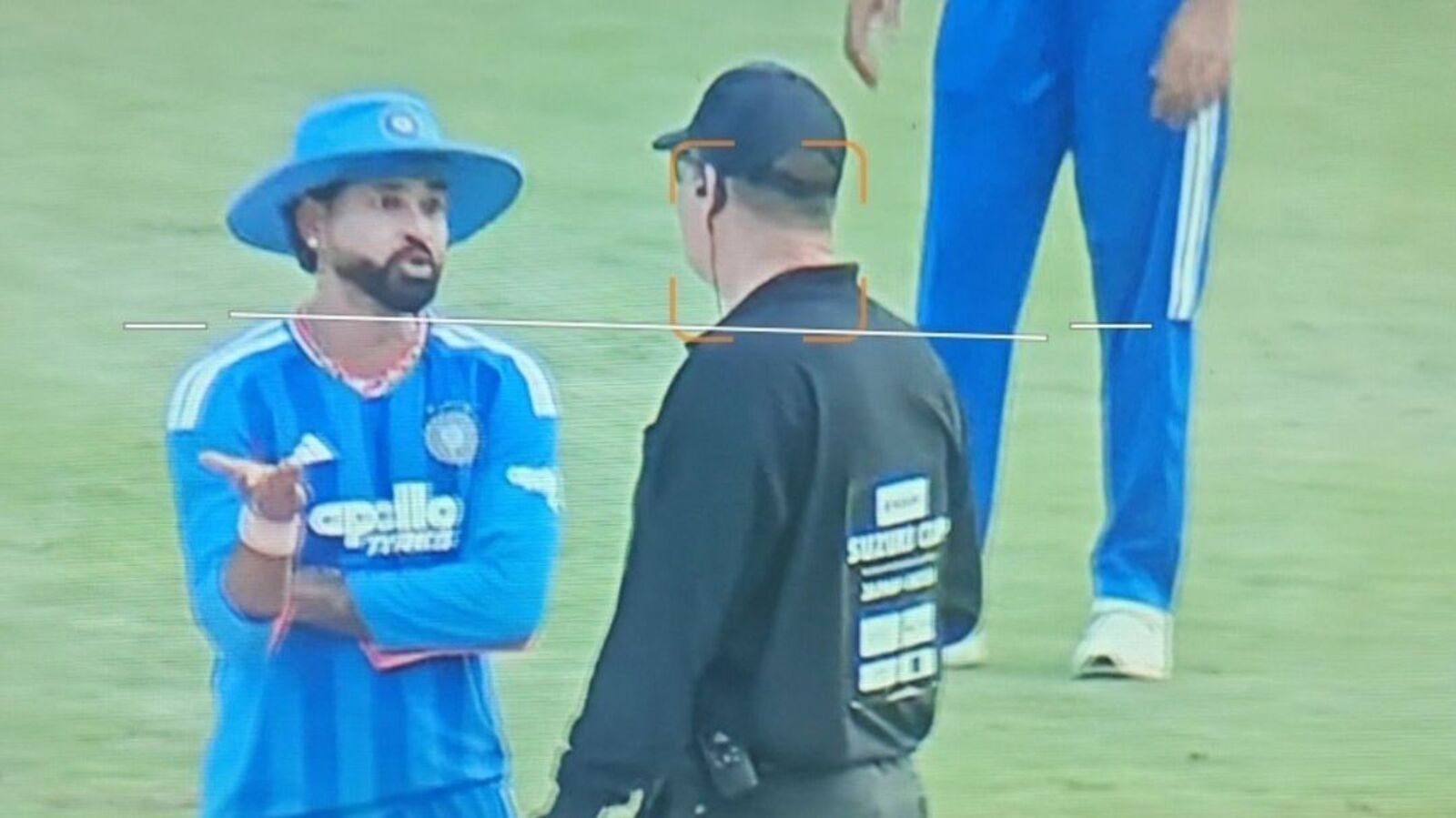
Shirai-Patmore, with an angled stance, tried to reverse sweep and missed the ball, which the umpire called a wide. Certainly, the Indians were not happy with the decision with skipper Shreyas Iyer walking to the square-leg umpire Chris Brown and intervene. Axar also voiced his displeasure to umpire Chris Thurgate.
The two umpires had a long discussion before overturning the decision. Had that remained a wide, Japan would have got an extra run and an extra delivery. The outcome of the match would have been different.Asian Game
Was the reversed decision correct?
According to MCC Laws of Cricket, under article 22.3.1, “the umpire shall revoke the call of Wide ball if there is then any contact between the ball and the striker’s bat or person before the ball comes into contact with any fielder.” In this case, there was no contact with the bat and the ball.
Article 22.4.1 states that “the umpire shall not adjudge a delivery as being a Wide, if the striker, by moving, either causes the ball to pass wide of him/her, as defined in 22.1.2 or brings the ball sufficiently within reach to be able to hit it by means of a normal cricket stroke.” In this case, the left-handed Shirai-Patmore reversed his stance and tried to hit the ball.
In fact, upon deep diving into the replay of that particula delivery, it is clearly seen that the ball after pitching, takes a sharp turn and was within the wide-ball mark when passing that white line.
#Whats #wideball #controversy #India #Japan #oneoff #T20I #cricketing #rules #Explained
