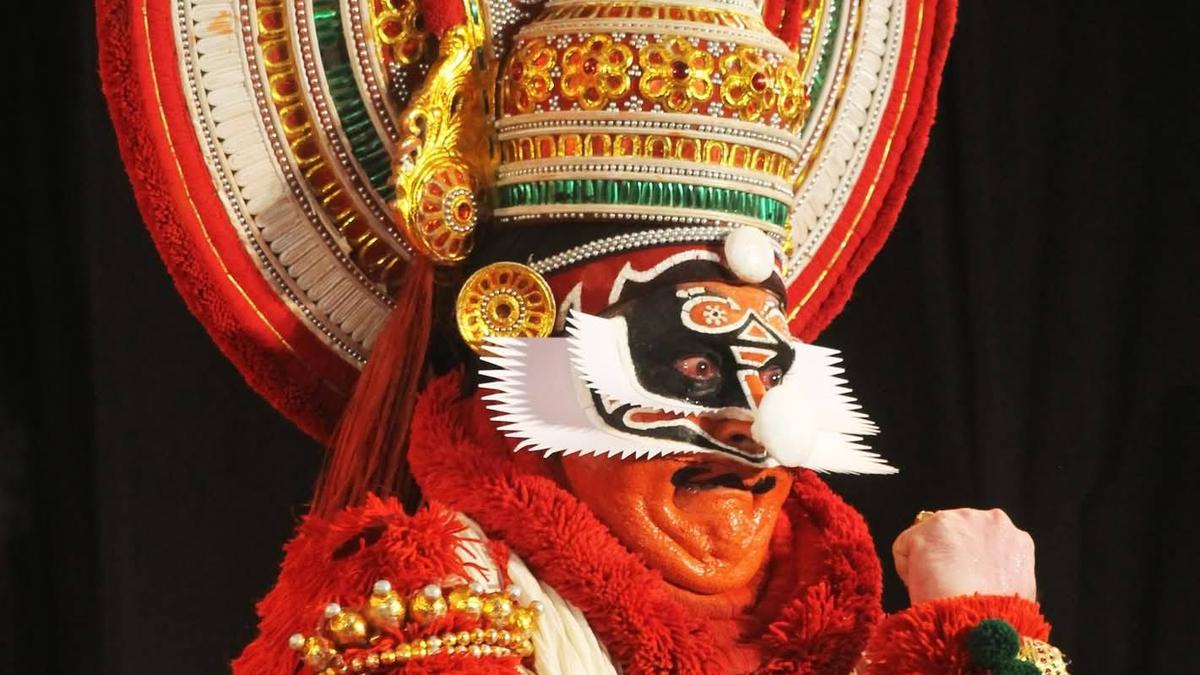

The six-footer, with piercing eyes and valorous movements, won the hearts as Sugriva.
| Photo Credit: Courtesy: Nisha Menon
Well-known Kathakali artiste Hari R. Nair passed away on May 23 at the age of 48. The death came days before the start of the new academic year at Kalamandalam, where he taught the dramatic-laden southern style of Kathakali. The artiste lived in the neighbourhood of his alma mater near Shoranur, but hailed from down-state Thiruvananthapuram district.
When Hari R. Nair forayed into the world of Kathakali, in his 20s as a student at Kalamandalam three decades ago, he faced piquancy. The masters had trained him in a whole range of mythological characters in the dance-theatre, yet none of them particularly suited the lanky youngster’s fun-loving temperament. Then, a happy twist defined Hari’s track record.
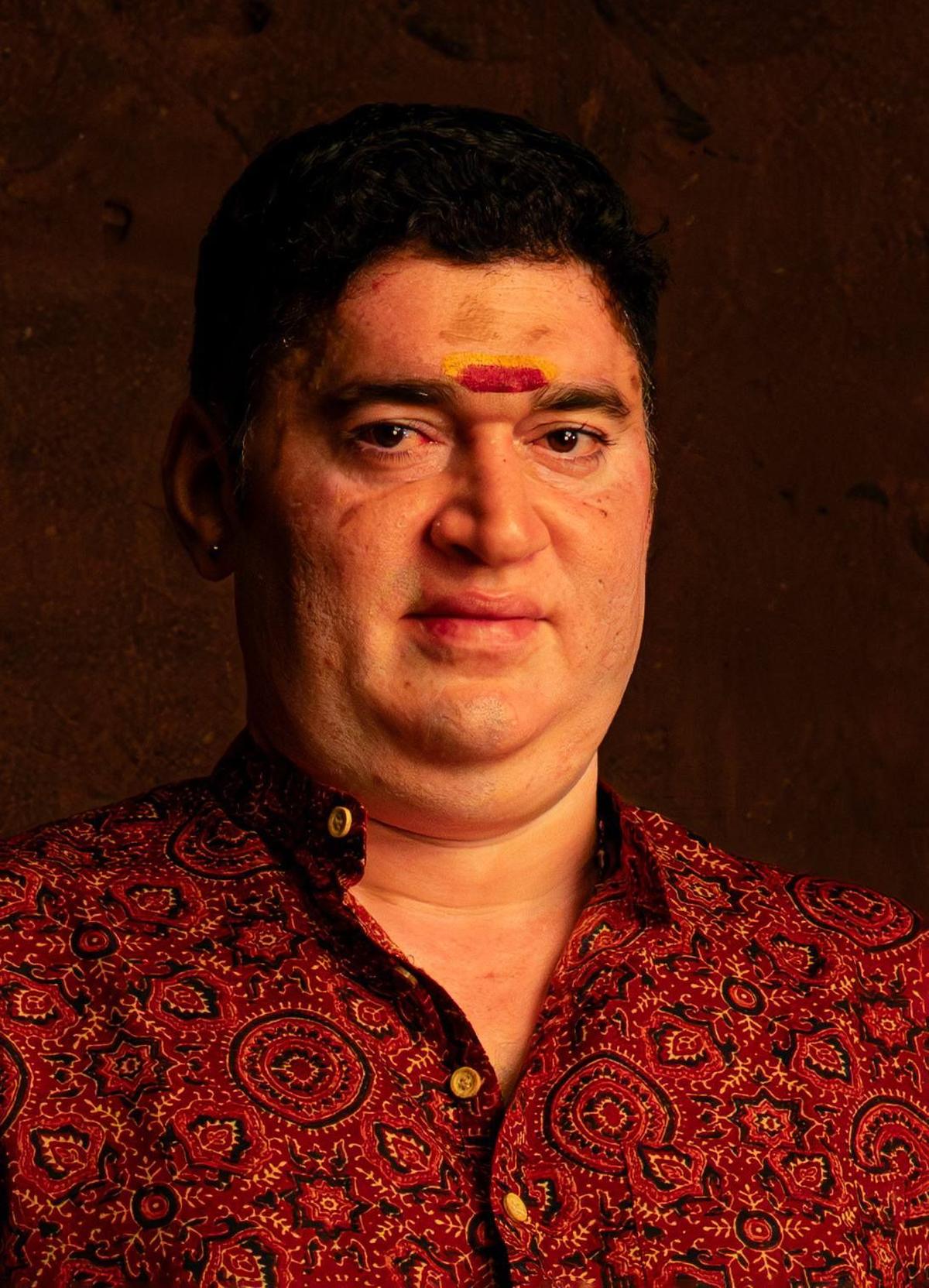
Hari R. Nair
| Photo Credit:
Special Arrangement
A contingency at the institution compelled the callow Hari to take on a challenging role — Bali, opposite his younger brother Sugriva, in a fiery duel. The ebullience of the Kishkindha king shone through Hari’s portrayal of the majestic monkey in a red beard and towering headgear. The six-footer, with piercing eyes and valorous movements, won the hearts of the audience and that included his teachers.
At the dawn of this century, Kathakali saw a potential star in Hari, for the portrayal of puranic villains with a mix of vices and foolhardiness amid servility to bosses. Hari soon won the confidence of aesthetes, impressing them with a keenness to watch all maestros, take their advice and grasp complex plots. His solid technique made it easy to bring out all the nuances, without deviating from classicism. As the Kerala ballet’s patriarch Kalamandalam Gopi notes, “Hari seldom overacted. No prolonged portrayals either.”
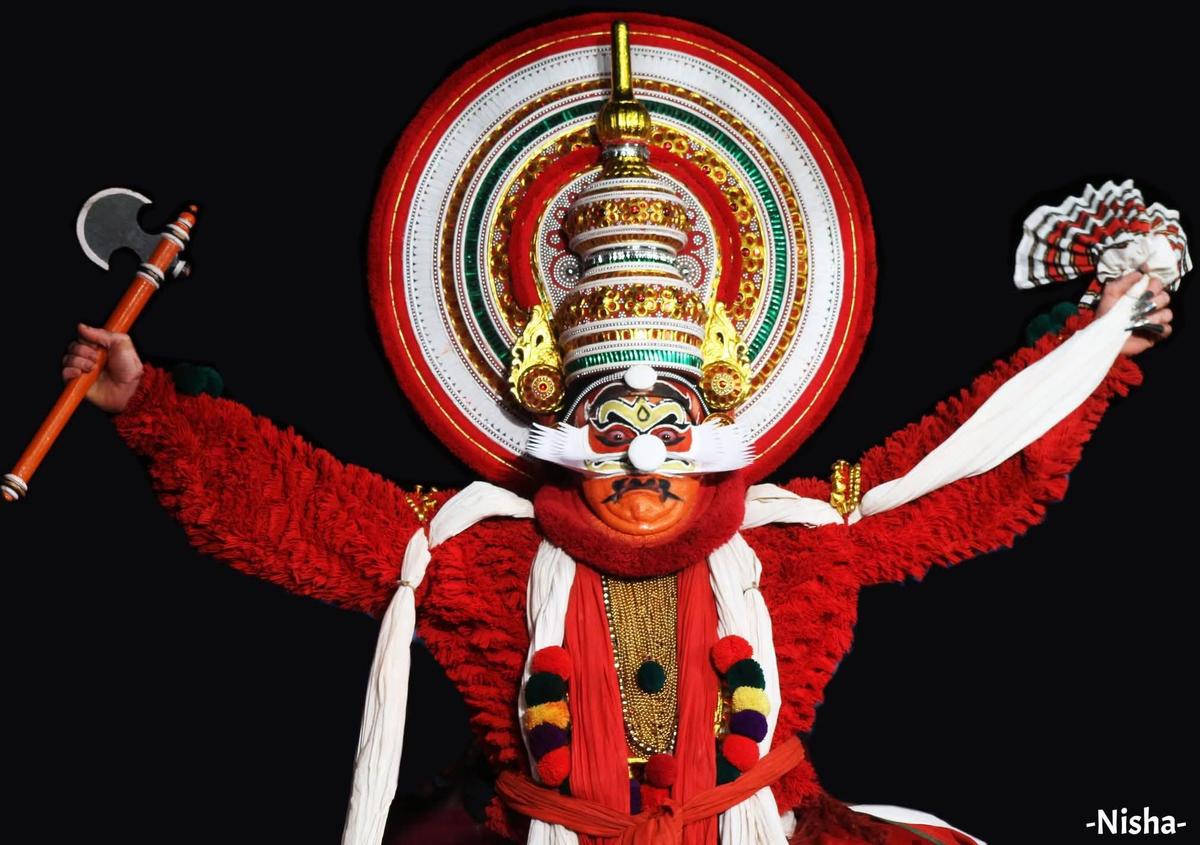
Hari portaying the role of Veerabhadra.
| Photo Credit:
Courtesy: Nisha Menon
Growing up around Attingal, Hari’s uncle took him to Kathakali nights far and near their Korani village. The charm of the colourful art instilled a desire in the school boy to take to the arts. He was initiated into Kathakali by guru Chathannur Kochunarayana Pillai. Hari debuted as Sita’s son, Kusha in ‘Lavanasuravadham’at a local temple. After class 7 in 1990, he got enrolled in Kalamandalam, and studied there for eight years, during which M. Rajasekharan, Prasanna Kumar and Gopa Kumar further honed his skill.
As a senior student ( in the mid 1990s), Hari charted his last-lap in female roles: the height was taking a toll. His mental orientation was not towards romantic protagonists or weighty antiheroes. That was when Bali gave him an unexpected break. On another occasion, shortly later, another exigency gave Hari a chance to portray Sugriva, again in Balivadham. Chief mentor Rajasekharan gave quick lessons for the night’s show while travelling on the troupe bus on a two-hour drive from Kalamandalam southward.
Hari always ensured that he watched Kathakali studiously. He also assiduously followed senior artistes — Nelliyode Vasudevan Namboothiri, Thalavadi Aravindan, Ramachandran Unnithan, Keshava Dev, Pariyanampatta Divakaran, and Kottakkal Devadas, among other specialists of the crimson-hued chuvannathadi types. In fact, Unnithan used to affectionately refer to Hari as “my camera”. Yet, as scholar Manoj Kuroor notes, “A close look would reveal Hari’s varied influences, but not once did he copy anyone.”
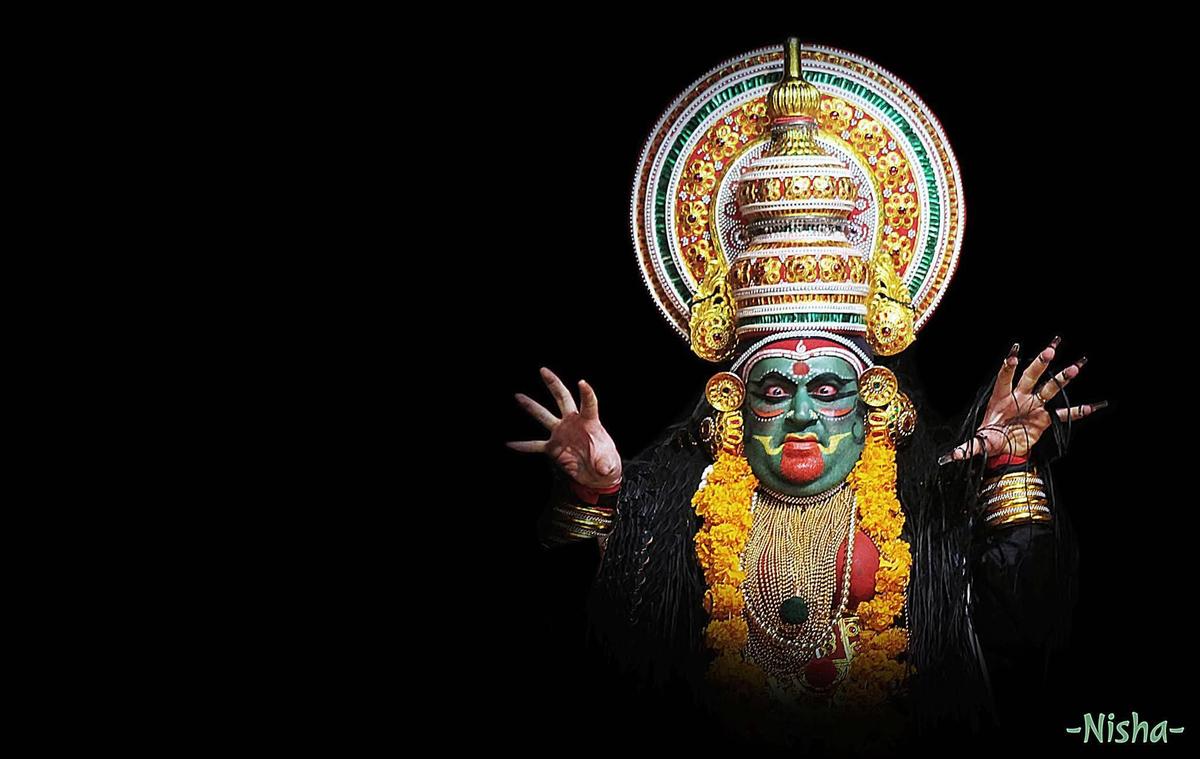
Hari Nair in the role of Bhadrakali
| Photo Credit:
Courtesy: Nisha Menon
Unnithan, now 75 and trained in the northern school, guided Hari initially by introducing him to top organisers. Hari represented the Kaplingadan idiom of the south. He used to say, “but the stylistic difference never came in between us,”. In fact, only ego issues can mar warm cooperation on the dais.” The artiste also essayed the black-painted Bhadrakali, less virtuous demonesses-hilarious old woman (Vriddha) in ‘Kuchelavritham’, comical Bheeru (fleeing soldier) and the occasionally talking mahout in ‘Kamsavadham’. Rarely, he donned serious roles, including the vengeful Roudra-Bhima.
Sadanam K. Harikumar, known for his experimental Kathakali productions, says Hari was open to novelties. “He was keen to learn afresh and do homework.”
Published – May 29, 2026 01:53 pm IST
#Remembering #Hari #Nair #Kathakalis #versatile #villain
