Pranav Kirti Misra of Huemn presents his streetwear label at Lakmé Fashion Week x FDCI on Friday in New Delhi. His name is missing from the revised electoral roll for his Lucknow constituency, where he voted in the 2024 Lok Sabha election.
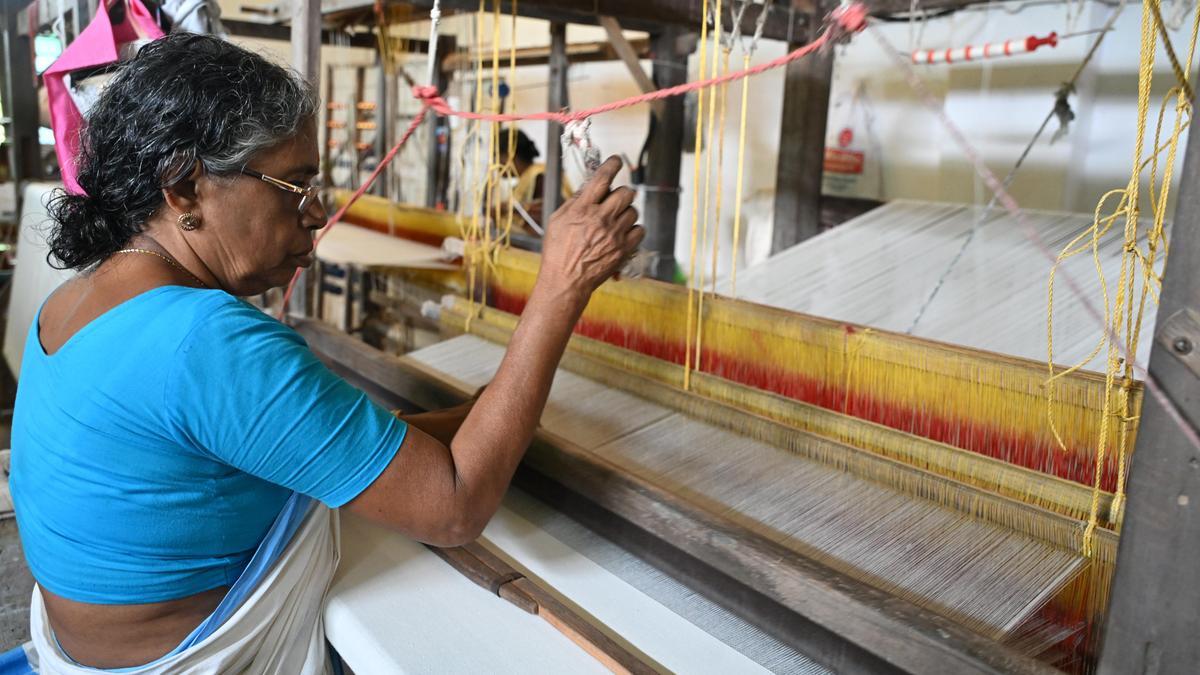
He is not alone. Ramesh Menon, 52, founder of Save the Loom, a Kerala handloom non-profit, and a former consultant to the Fashion Design Council of India (FDCI), found his name dropped from the rolls before the State elections, as did his 85-year-old mother, Radha,who has voted in every Kochi election for 35 years, most recently in February in the local corporation election. His reapplication was rejected; no documents were sought. “Right now, my mother and I are voteless,” says Menon, who is not attending Fashion Week.
FDCI chairman Sunil Sethi’s name went missing from the list too. It was because verifying officials discovered his old home locked afterhe had relocated from Delhi’s New Friends Colony area to Golf Links. It was restored within a week. “Voting rights should be provided to every eligible voter,” Sethi, who is in his 70s, says.

FDCI chairman Sunil Sethi.
| Photo Credit:
Special arrangement
With Delhi in protest for the second time this year, postponing Fashion Week was never an option for Sethi. Foreign buyers, Russian designers, an international jury, and a 15-member Italian trade delegation were already in town for what he calls “a multi-crore event”. “They have nothing to do with our internal politics,” he adds. “It’d be a major embarrassment for us to cancel now.” Sethi is also wary of the U.S. raising duties on exports. The six-day event which began on October 13 employs over 300 people and attracts about 200 buyers, he says. FDCI has close to 400 member designers. In past seasons, many of the 50-odd labels at the closing-day Stockroom sale have each sold over ₹10 lakh in a day.
“The business of fashion, I feel, should remain apolitical,” he says. In July, FDCI went ahead with its India Couture Week as the Cockroach Janta Party (CJP), a satirical youth movement born online, protested alongside students against the NEET medical entrance paper leak at Jantar Mantar. Union Education Minister Dharmendra Pradhan resigned on July 25. Now, with the Opposition and civilians across all ages joining in, protesters want Chief Election Commissioner Gyanesh Kumar to resign and a reversal of the disputed Special Intensive Revision (SIR) of electoral rolls. Media reports put deletions at more than 13.3 crore. On October 12, Jantar Mantar was denotified as a protest site.
Fashion in India has a political history, though. During India’s freedom struggle, Gandhi made hand-spun khadi a uniform of resistance against British mill cloth. Decades later, it reached the runway as craft. At FDCI x Lakmé Fashion Week in 2022, for example, designers Anavila Misra, Anju Modi, Rina Dhaka and Abhishek Gupta Benares showed khadi collections.
Two Indias

Nin Kala for Gaurav Gupta show.
| Photo Credit:
Special arrangement
Nin Kala, 30, a Mumbai-based model walking six shows, sees two kinds of young people in Delhi now: those working the shows and those protesting. “They probably take the same Metro to work, but they have different destinations,” she says. “I have two definitions of India right now. People privileged enough to see the country going through a drastic change but still acting as if everything is normal. And others who may not be as privileged and want change, but still have to work according to the system.” Kala is caught between the two. She has marched in Mumbai but is afraid to join the Delhi protests. “I’m too scared to go… if I get detained, I’ll miss the Week,” she says.
Pratyan Chakraborty, 22, works behind the scenes at Fashion Week. She grew up in North Bengal’s Hamiltonganj village and studied at Delhi’s Jamia Millia Islamia. Her name is on the roll, but many in her village were struck off so she went home to vote, afraid she might be next.

Designer Pratyan Chakraborty.
| Photo Credit:
Special arrangement
She has been to two protests. At Jantar Mantar on October 10, she saw friends being beaten up by the police. At an INA gathering, acquaintances were harassed, abused, and injured. “Here I’m talking about designer clothes when we don’t even know what the future looks like.” She adds, “I don’t have the option of falling back on my family for financial help.” She posts about the protests but not the shows. “I don’t know if I have the heart to do it.”
Is the runway a bubble?
Khushi, 21, a Delhi student on the event’s content team, doesn’t feel torn. “I don’t really have an opinion because not everything is black and white. It’s not just fashion, you know. It’s thousands of people whose jobs are at stake.” She has a voter card but has never voted. When asked if she is on the list, she replies, “Voting list for what exactly?” She hadn’t heard about the deletions. “I am under a lot of academic pressure right now.” The protests have reached her only through social media.
The venue also helps maintain that distance. Sethi says the Taj Palace, in the Chanakyapuri diplomatic enclave, is 30-45 minutes from the protest sites. “The situation here is business as usual.” FDCI has its own security team. “We can’t take a risk,” he says.
Namrata Joshipura, who is also showing this week, sees business as usual, too. “Have I stopped selling or doing business? I haven’t, right?”

Designer Namrata Joshipura’s (centre) showcase at Lakmē Fashion Week X FDCI 2025 in Mumbai.
| Photo Credit:
Perfect Shadows / FDCI x Lakme Fashion Week / RISE Worldwide
No slogans this time
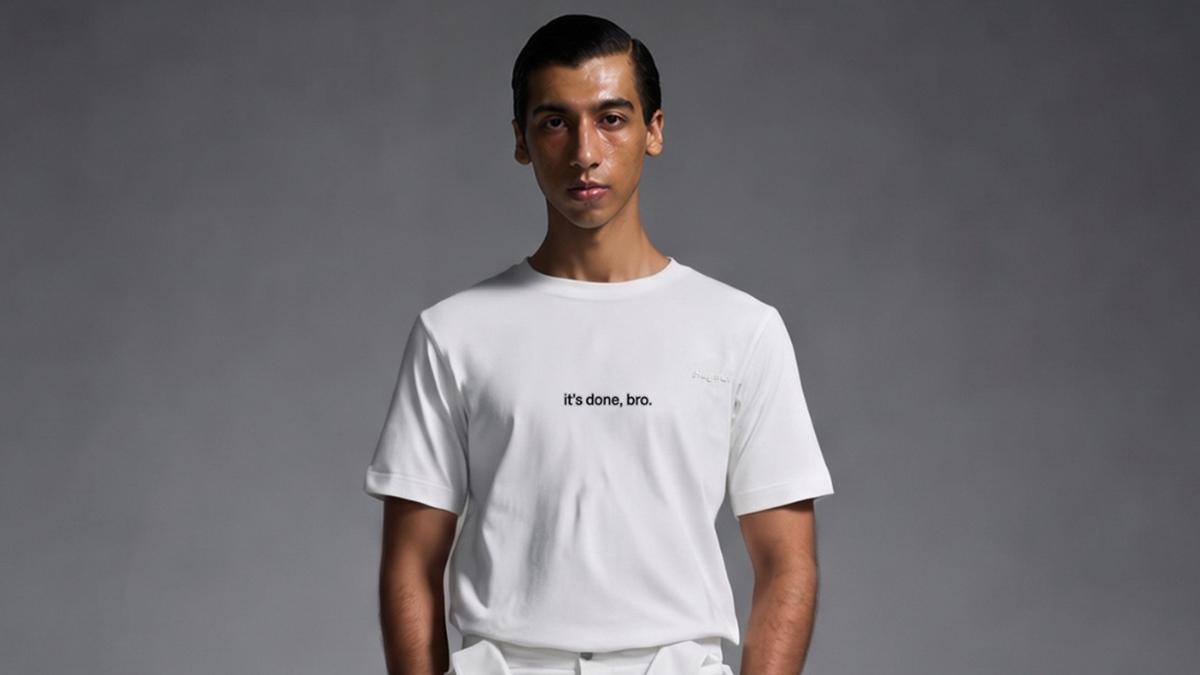
Not everyone on the schedule has stayed quiet. During the NEET protests, Huemn postponed a collection campaign and released a T-shirt that said ‘It’s done, bro.’, a line from actor Salman Khan’s appeal to Ladakh activist Sonam Wangchuk to end his hunger strike. The phrase later became a rallying cry in the protests. For Misra, a campaign could wait. But a runway show could not.

Designer Pranav Kirti Misra.
| Photo Credit:
Special arrangement
“There is iconography but no slogans,” Misra, 42, says ahead of the show. The collection is built around “beauty and terror”, a theme the label returns to. There’s an oxblood denim jacket with chikankari embroidery, a snakeskin print and a draped “mummy top”, inspired by Egyptian mummies. Misra calls Huemn “the rage against the machine of fashion” and says its sponsors accept the risk since “our work is not vanilla”.
Can fashion ignore politics?
Joshipura, a self-appointed krantikari (revolutionary), joined the July protest at Jantar Mantar and stayed until the tear gas. “If I did go for the protest last time, it was as a mother,” she says. This time is different. “I’m part of a larger platform with various stakeholders. I have not even considered saying that I don’t want to do the show.”
She sees no contradiction. “As a designer, I want to celebrate India’s craftsmanship, creativity and heritage. But as a citizen, I’m equally conscious of what’s happening around us.”
There was a time when Manish Arora printed two men embracing in sporty separates (Lakmé India Fashion Week 2003) and Rohit Bal sent out bare-chested men in lungis wearing sindoor. “I miss those days too, but I’m still in the business,” says Joshipura, “A lot is dictated by commerce.”

Designer Tarun Tahiliani.
| Photo Credit:
Special arrangement
The day after Pradhan resigned, designer Tarun Tahiliani said at his couture presentation, “I’m apologising to you, Gen Z, because our generation has allowed this to happen […].” His premium menswear label, Tasva, showed on Thursday. “Unfortunately, most of India finds it expensive. There’s a part of me that wants fashion to be democratised,” he says.

Tarun Tahiliani’s (centre) Tasva collection.
| Photo Credit:
Special arrangement
He wants the same for the country: “Democracy belongs to the voter. They must fight to stay on voter rolls. It’s the birthright of people born here.” Tahiliani is equally firm about the industry. “We must fight to keep the wheels of industry turning because without either, there’s just darkness.” The runway, though, stays out of it. “They are completely unrelated things. My views are clear and known, but there’s no need to politicise the show,” he concludes.
The writer is a columnist and critic, with a keen focus on fashion, textiles, and culture.
#Business #usual #Fashion #Week #unfolds #protests #voter #roll #deletions #India