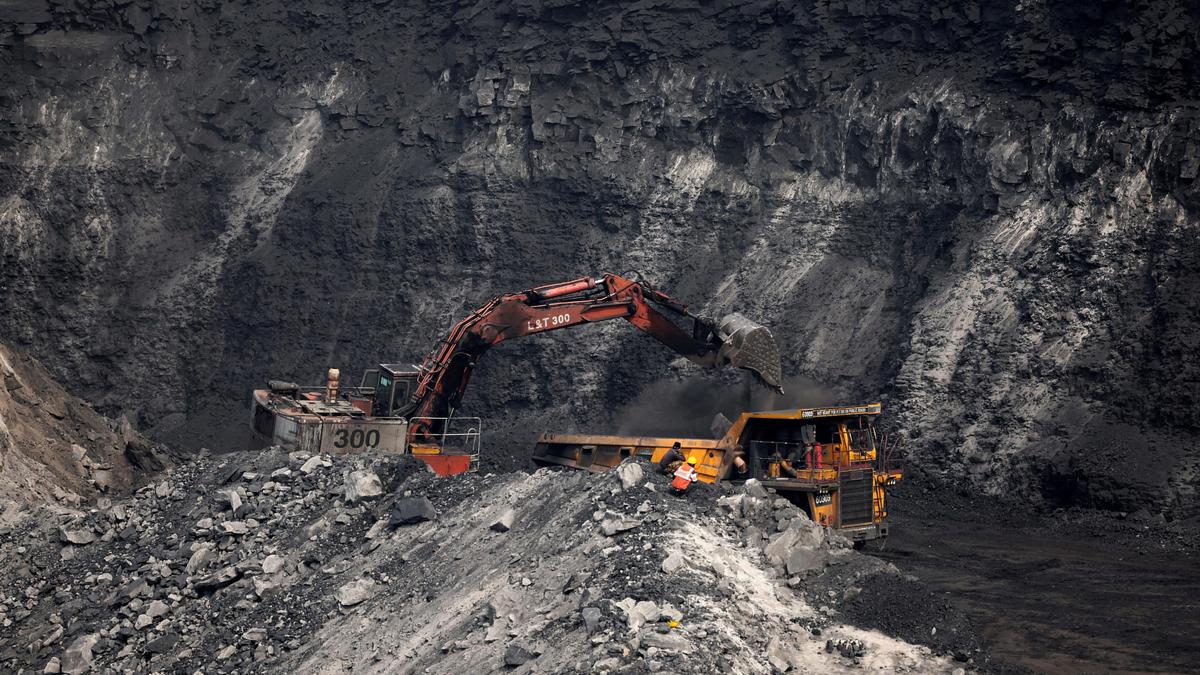
The ₹40,000-crore mine closure corpus, which the Union government has earmarked, signals a beginning of new economic lifecycle, wherein future generations inherit thriving ecosystems.
Abandoning an ecologically insensitive ‘extract-and-abandon’ model, India, the second largest producer of coal in the world, has chosen a path of circular economy, implying diversified local economies; even as details are sketchy on the detailed breakup of corpus’ deployment, although the government officially announced a 25% allocation for the community development.
The closure— a planned, people-centric process or PPP (not to be confused with public private partnership)— plans to unlock a new green services industry; improve environmental, social and governance (ESG) performance; convert exhausted mines into productive and tourism assets; support India’s voluntary carbon market (VCM); help local micro, small and medium enterprises (MSMEs) and rural enterprises; and generate rural green employment.

This scientific approach, which evolves from a regulatory obligation into a national mission of ecological regeneration and sustainable development, derives strength from 2025 Mine Closure Guidelines, mandating progressive closure, financial assurance through escrow accounts, independent monitoring and post-closure environmental surveillance.
The past two years has seen 42 mines closed, with the Ministry of Coal aiming to scientifically close more than 105 mines in the coming years.
Underlying theme
Scientific mine closure is systematic restoring of a mine to safe, environmentally sustainable and economically productive condition after mineral extraction ends.
Beginning with technical stabilisation, which ensures long-term physical safety for nearby communities, the process then goes through the stage of environmental restoration. It includes social and economic rehabilitation.
The Coal Controller Organisation— the technical and institutional backbone of new mine closure system— has designed RECLAIM, L.I.V.E.S., SUVIKALP and SUVIKALP Samvaad, targeting local communities, mine planners, mine policy makers and operators respectively.
The recent initiative also saw an implementation pact between the Ministry of Coal and Deutsche Gesellschaft für Internationale Zusammenarbeit (GIZ) of Germany for technical cooperation on ‘To-be closed mines’, aiming to strengthen ties in scientific mine closure, mine repurposing, technical capacity building and knowledge exchange.
The distinguishing feature of scientific closure is the productive reuse of reclaimed land as the PPP transforms degraded land into long-term economic assets. “Time has come to change the phrase from mine closure to mine of wealth,” Dr Jitendra Singh, Minister of State (Independent Charge) for Science and Technology, has aptly put it.
The nitty gritty of corpus allocation has not been spelt out, but experiences suggest that bulk of it may go for environmental reclamation, followed by community development, mine repurposing, safety, and monitoring.
Bright spots
This sustainable and circular mining framework, balancing mineral development with ecological conservation and community welfare, seeks to strengthen rural economies as it allocates 25% of approved closure costs — around ₹10,000 crore over the coming decade — for community development, including livelihood creation, public infrastructure and skill development. This helps mining districts reduce their dependence on coal extraction.
Catalysing a new mine restoration economy, the initiative is slated to see major growth sectors as renewable energy, digital mining technologies (MiningTech), carbon finance, environmental consulting and ESG advisory, geospatial technology, green infrastructure and sustainable construction, and ecological restoration.
Mine closure is evolving into a climate-finance opportunity for India, whose economy-wide net-zero target is set for 2070 and comes amid
India’s VCM moving beyond the conceptual stage to a formal regulatory framework with dedicated institutions and a sovereign-backed offset mechanism.
Global turnaround
Global experiences show that post-mining land transformation can turn them engines of sustainable tourism, employment and regional development.
The U..K Eden Project, a former china clay pit, is now a Botanical Garden; Poland’s Wieliczka Salt Mine turned into UNESCO World Heritage underground tourism; Germany’s Zeche Zollverein, which transformed Ruhr coal belt into a cultural economy; Romanian Salina Turda, a salt mine turned underground amusement park; and the U.K. Big Pit National Coal Museum; all have reported increasing footfall and revenues.
India is several decades behind the U.K., Germany and Poland in monetising closed mines through tourism.
Lessons from U.S. Appalachian projects (carbon removals) suggest that for India, integrating mine closure with robust carbon accounting could unlock a new asset class.
Global investors increasingly evaluate local mining companies on ESG parameters, which become particularly important as they seek global financing.
Reality bites
India has as many as 341 closed/abandoned coal mines as on March 31, 2024, Ministry of Coal had said in a reply to a question in Lok Sabha.
Nevertheless, numbers tell a sorry tale as India has only a few operational examples where former mines have been converted into tourism hubs— Zawar Mines Heritage Tourism Project, Rajasthan; Sandur Eco-Tourism and Kudremukh Iron Ore Region, Karnataka; Neyveli Lignite Mine View Point, Tamil Nadu; and Indian Bureau of Mines’ demonstration projects are among the few.
Read: Collapse of coal mining in Britain has lessons for India | Analysis
India has not yet commercialised reclaimed mines at scale as most projects remain CSR or corporate social responsibility initiatives or under pilot basis, or as local sites. Consequently, there is a dearth of national database reporting annual tourist arrivals or revenue from them.
If scientifically reclaimed, several of the closed mines could be repurposed into eco-tourism, adventure tourism, concert venues, water-based theme parks and underground tourism, whose multiplier effect on the local economies is huge.
For India, where many depend directly and indirectly on mining, the multiplier effect will depend on what replaces the closed mines.
The Coal Neer packaged drinking water at Handidhua underground mine in Talcher in Orissa is just a beginning.
The Union goverment’s latest initiative, which is far more than an environmental exercise, is expected to create opportunities across a wide range of industries.
Potholes
The scientific closure appears smooth but due to multi-stakeholders nature, it is challenged multi-directionally. Multiple agencies — including the Ministry of Mines, Ministry of Coal, Ministry of Environment, Forest and Climate Change, state governments and pollution control boards— make the entire process tedious and coordination deficit can delay approvals and weaken oversight.
Several old mines were abandoned before modern closure regulations came into force and many lack responsible operators or adequate financial provisions (as no mine closure plans existed for the mines discontinued/abandoned/ closed before 2009).
A mine closure plan is relatively straightforward, but states face shortages of skilled personnel, environmental auditors and monitoring infrastructure.
Much of the corpus, built through statutory financial assurance and mine closure deposits of leaseholders, is rather ring-fenced against individual mining leases and is meant to finance the closure obligations of specific ones, and not a common pool.
Need of the hour
Scientifically closing mines will need an artistic maneuvering of multi-level potholes, eschewing the risks of greenwashing.
The corpus, built over the years, alone cannot guarantee success as the stakeholders in the value chain must guard against the pitfalls of weak monitoring, funds diversion or underutilisation and inflated compliance claims.
Closure plans should be independently audited, supported by real-time digital monitoring using drones and satellite imagery, and backed by strict post-closure environmental surveillance.
#closure #opens #opportunities #circular #economy #coordinated #efforts
