In 1945, Jan Hendrik Hofmeyr, the finance and education minister of South Africa, visited Mahatma Gandhi’s birthplace in Porbandar. He was appalled at the neglected state of the house where Gandhi was born. Hofmeyr sincerely believed that the building, if developed into a memorial like the Phoenix Ashram in Durban, could inspire future generations.
Concerned, Hofmeyr turned to Raj Ratna Nanji Kalidas Mehta, the city’s famous industrialist and philanthropist, conveying that “the nation had failed to understand the greatness of the Mahatma” and that any other country would have spent millions to build a permanent memorial.
ALSO READ | ‘We need both: Gandhi and Ambedkar’, says Bezwada Wilson, who crusades against manual scavenging
Pained by this thought, and resolute, Mehta took up the project. But the road ahead was not easy. He visited Gandhi in Sevagram, where previously he and his wife Santokba had spent many days in prayer and listening to the Mahatma’s teachings. Although lamenting the squalor of his home, Gandhi dismissed the matter citing his inability to do anything as the house was owned by several family members.

Manek Chowk: Porbandar’s main city square is an example of the rapidly transitioning urban skyline. Mahatma Gandhi’s statue faces one of the large old Islamic-influenced gates with arched windows alongside. Wide wooden balustraded verandahs and airy rooms are fast being replaced by boxy cement structures.
| Photo Credit:
Deepthi Sasidharan
It takes a village
Mehta persisted and took the matter to His Highness the Maharana of Porbandar and to other prominent citizens of Porbandar. Money was raised and an amount of ₹75,000 was paid as compensation to nearly 29 members of Gandhi’s family.
Finally in 1947, as India awoke to freedom, the foundation stone was laid by Gopaldas Ambaidas Desai, a prince who had given up his principality and become a freedom fighter, and was then the president of the Saurashtra Congress.
READ | How Gandhi’s moral vision could be a critical catalyst for capitalism
Mehta extended his generosity further and bought the land adjoining Gandhi’s home and a grand memorial opened in 1950 as an entire complex. With a beautiful new building by the architect Mistri Purshottambhai — that incorporated elements of vernacular Hindu and Jain-Gujarati architecture and Buddhist elements — a vast marble courtyard, a library and a museum, Kirti Mandir became famous across the world. In 1965, Mahatma Gandhi’s wife Kasturba’s home, a two-minute walk away, was also made a protected monument and accessible from the complex.

Gandhi’s statue: The statue at Manek Chowk stands in a fast-changing world. Behind, the traditional Saurashtra architecture gives way to cheap glass and concrete buildings in the main city square.
| Photo Credit:
Deepthi Sasidharan
The sad reality of Kirti Mandir
Today, in the quiet town of Porbandar, in coastal Gujarat, Kirti Mandir is still the town’s main centre of tourist attraction. But neglect is all around. Managed by the Archaeological Survey of India, the eponymous blue ASI board — stating “the house where the Mahatma Gandhiji was born” — is all that remains of the lofty ideals of the founding members and the town’s citizens.
READ | Polyester flags? Gandhi would have protested this desecration of his beloved khadi
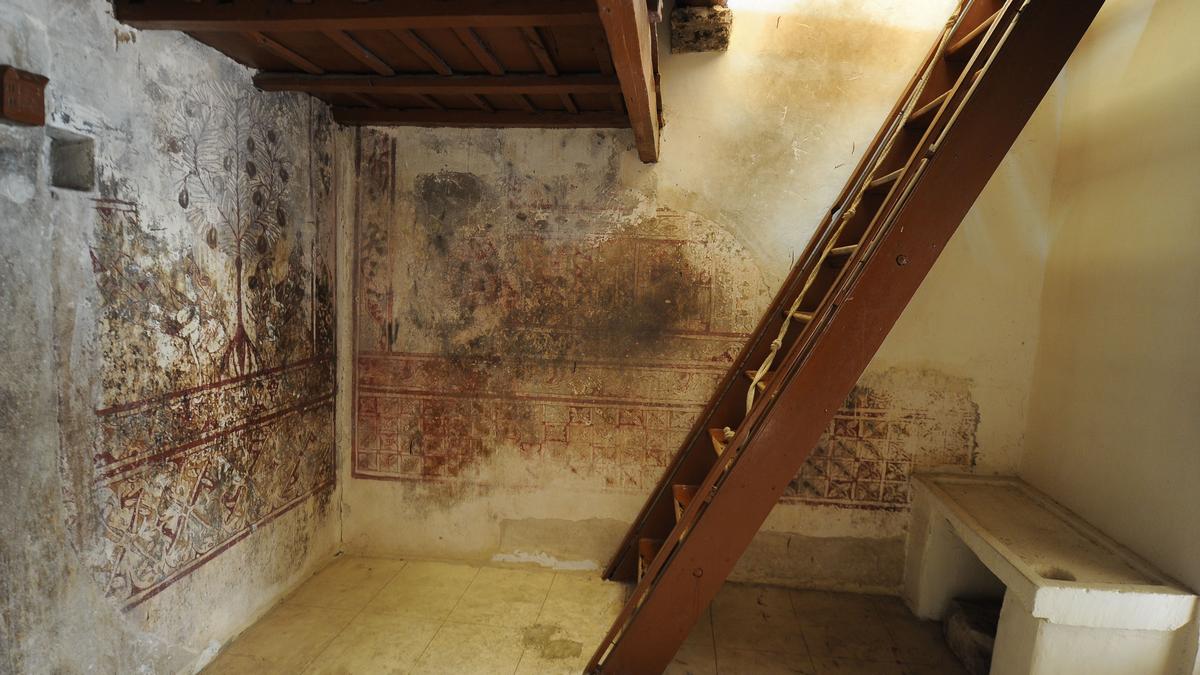
Gandhi’s home has remained closed for over a year, ostensibly for repairs. In both Bapu and Ba’s homes, the precious wall decorations are deteriorating because of mould and lack of upkeep. The homes need desperate professional help and an overall structural conservation re-haul. The museum is a relic of the past, both in need of renewal and attention to artefacts.
Somehow, Hofmeyr’s words come back to haunt. Perhaps we have forgotten yet again the greatness of the Mahatma.
The writer is an independent curator and the founder-director of Eka Archiving Services.

The Mahatma’s museum: The tiny museum room in Kirti Mandir comprises a clutch of fading photographs and some memorabilia. It is surprisingly busy throughout the year.
| Photo Credit:
Vijay Soneji

In Bapu’s home: Locals call Porbandar, Gandhiji’s janmabhoomi. His childhood home is spread over three levels and narrow wooden staircases connect them. The maintenance of the building is shoddy with rustic wiring and hastily fitted electrical boxes.
| Photo Credit:
Deepthi Sasidharan
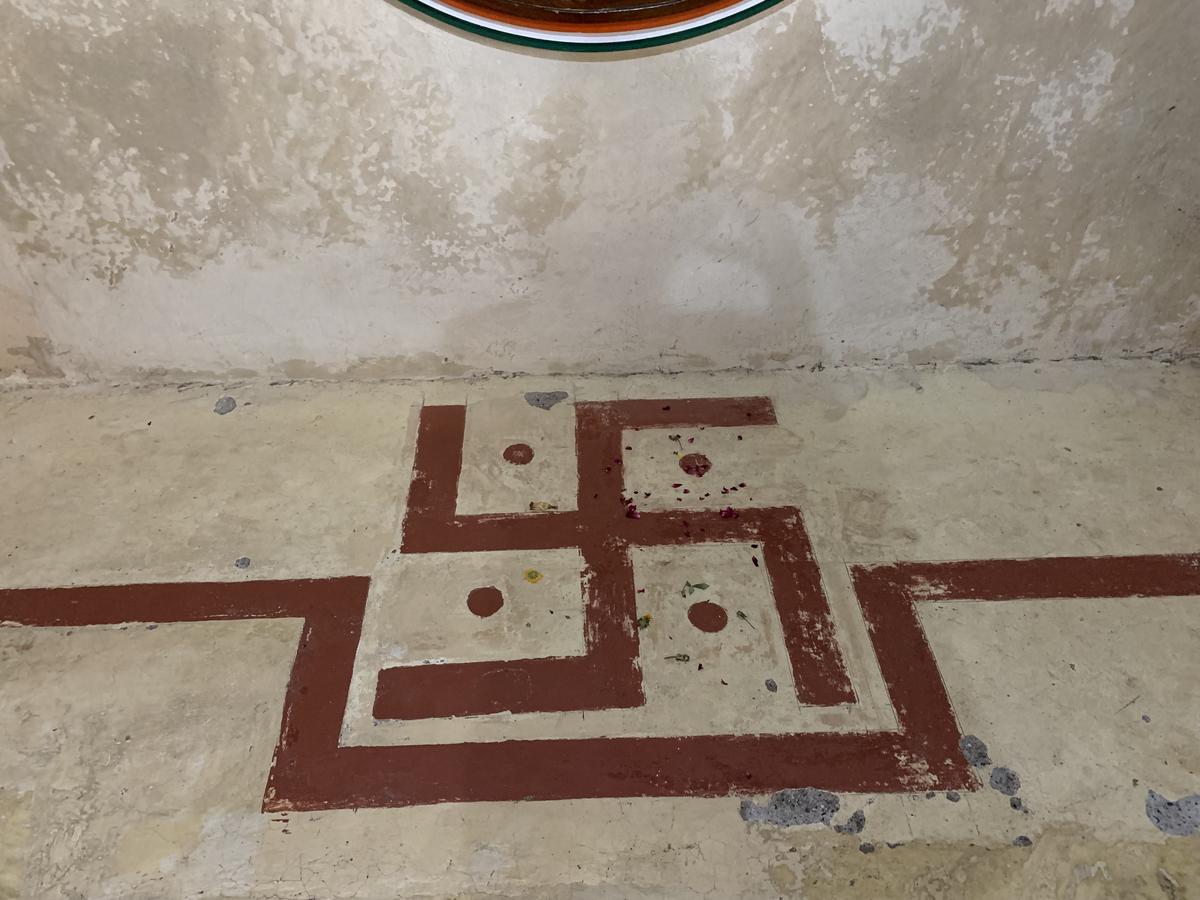
The holy swastika: On the ground floor of Gandhi’s home is this painted Hindu swastika, which marks the spot where he was born on October 2, 1869. Its stark unexpectedness seems justified as many regional visitors touch the floor as a mark of respect — a ritual otherwise reserved for temples or places of spiritual solace.
| Photo Credit:
Deepthi Sasidharan
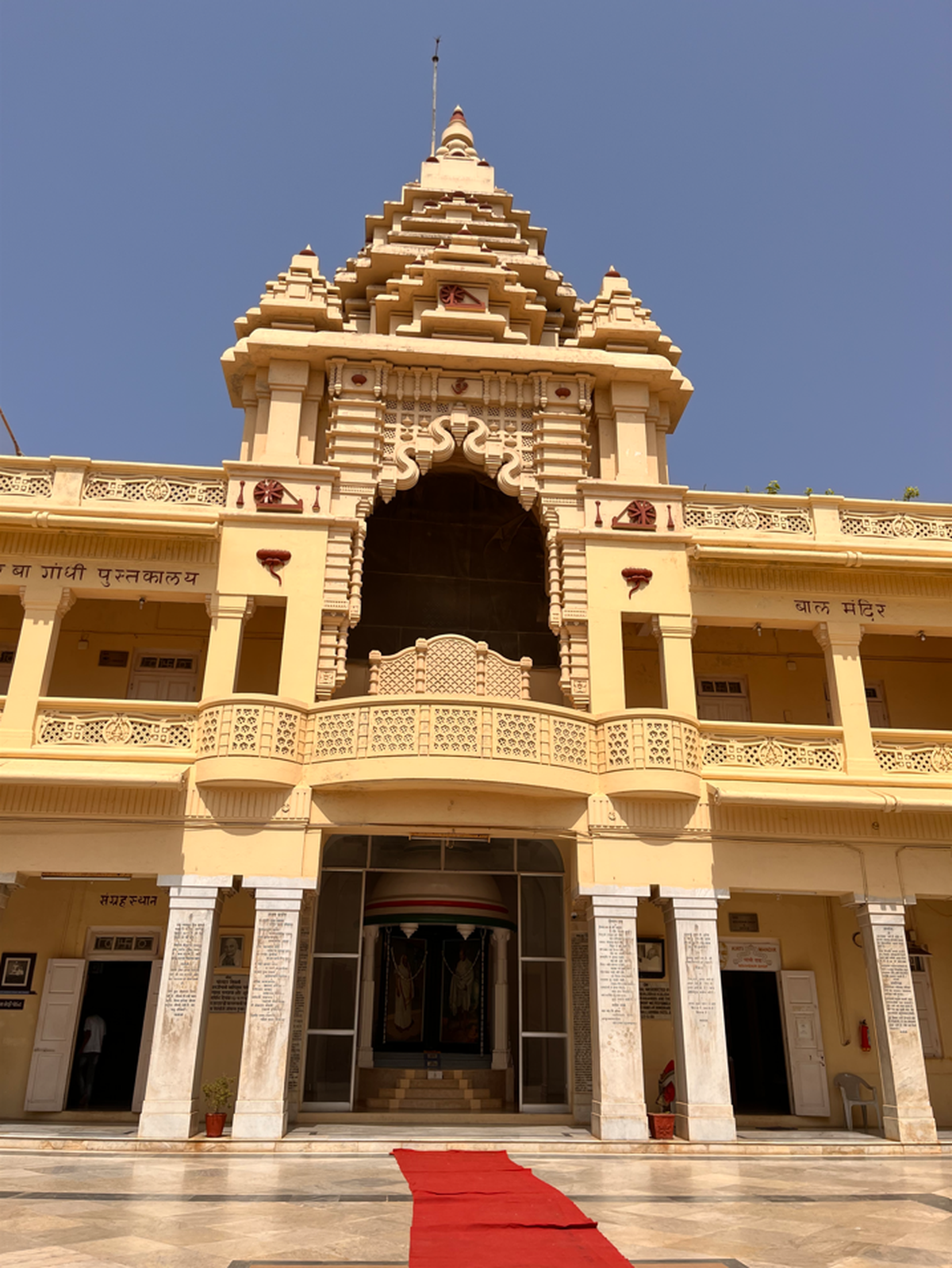
One man’s munificence: Raj Ratna Nanji Kalidas Mehta not only purchased Gandhi’s home and sponsored the building of Kirti Mandir, but he later donated the entire complex to the nation. The towering ‘shikhara’ is 79 feet high, marking 79 years of Gandhi’s life.
| Photo Credit:
Deepthi Sasidharan

Walls with history: The Gandhi family’s ancestral home was purchased by Harjivanji Rahidasji Gandhi in 1777. His son made it a two-storey home, and the addition of the third floor was complete by the time Gandhi was born. It was flanked by the Vaishnav Haveli and the Raghunathji temple, with the Kedarnath temple in front.
| Photo Credit:
Vijay Soneji

Charkha at Kirti Mandir: The quirky architecture is replete with symbols of Gandhi’s life as well as a newly-independent India.
| Photo Credit:
Deepthi Sasidharan

These include the charkha, the dharmachakra, curling lotuses, swastikas and elements incorporated from vernacular temple architecture, such as lattices, screens and distinctive arches.
| Photo Credit:
Deepthi Sasidharan

Porbandar’s Art Deco: Built in the late 1940s, the architect incorporated the Art Deco style that was in vogue at the time, like these inspired flames.
| Photo Credit:
Deepthi Sasidharan

The deep influence of the Arya Samaji movement on patron Mehta is also seen in the swastika symbol in the window grills and elsewhere.
| Photo Credit:
Deepthi Sasidharan

Open to the elements: Rain and a neglected roof have contributed to the rapid deterioration of this structure, and the painted decorations within.
| Photo Credit:
Vijay Soneji

Forgotten for now: A view from the courtyard of Gandhi’s home. His father and grandfather were both in service to the royal Maharanas of Porbandar.
| Photo Credit:
Vijay Soneji

In memoriam: A visitor looks at a portrait of Mahatma Gandhi (not pictured). Beyond the red line is the swastika.
| Photo Credit:
Vijay Soneji

At Ba’s home: Kasturba Gandhi’s home stands on a quiet alley behind Gandhi’s. The 19th century building is a fine example of a well-to-do family residence. Sinkholes on the roof captured rainwater (stored in an underground tank for the arid months).
| Photo Credit:
Vijay Soneji

The multi-storied house has practical small rooms, including two kitchens, and many decorative elements. She lived here till she married.
| Photo Credit:
Vijay Soneji

A dream forgotten: The ‘Swacch Bharat’ and ‘Azaadi ka Amrit Mahotsav’ campaigns have become distilled to mere signboards in small towns. An old hand pump behind the memorial building.
| Photo Credit:
Deepthi Sasidharan
Published – September 30, 2022 08:01 am IST
#Kirti #Mandir #Mahatma #Gandhis #birthplace #suffers #neglect #decay #today
