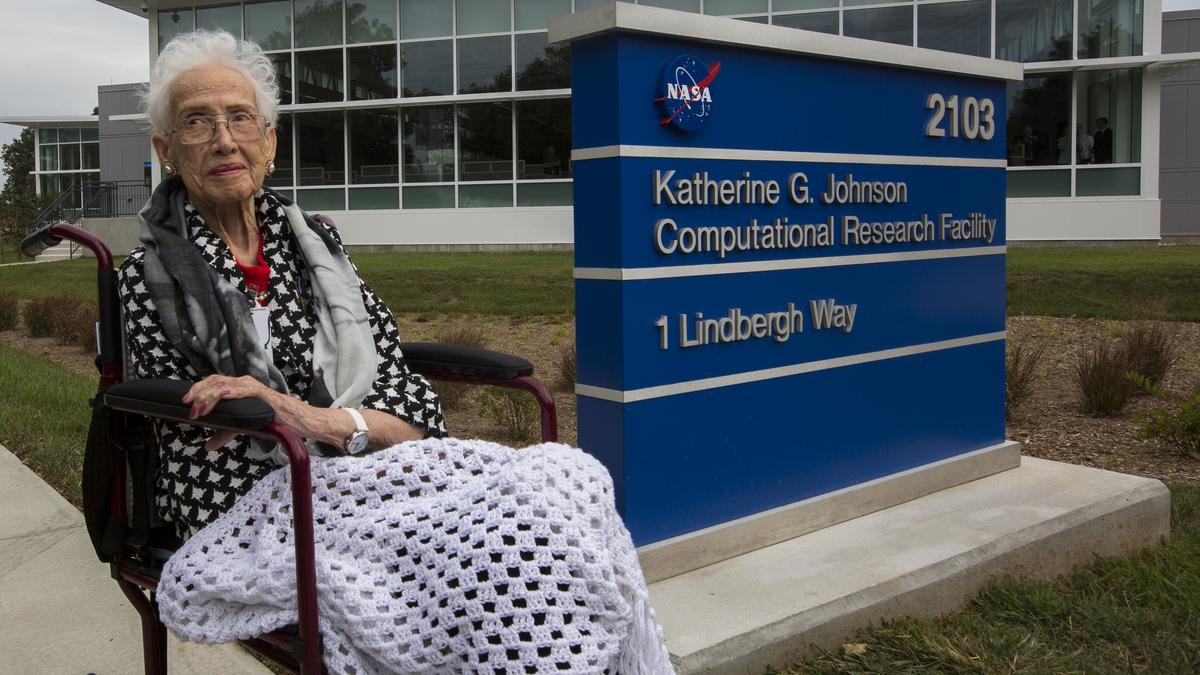
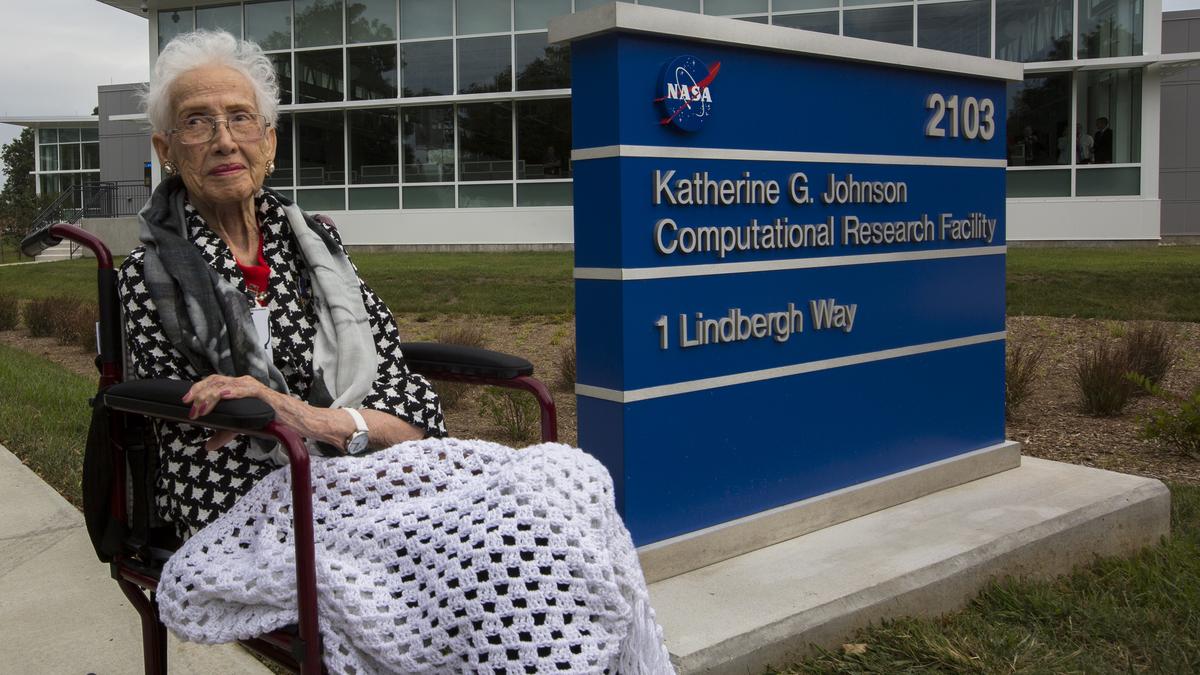
Katherine at the Katherine G. Johnson Computational Research Facility.
| Photo Credit: David C. Bowman, NASA
At the age of 10, a young African American girl in Virginia, U.S.A., started high school and then went on to graduate from West Virginia State College at 18, earning degrees in mathematics and French. From a small town to being of extreme importance to NASA in the late 20th Century, this is the story of one of the pioneers who broke the ceiling of racial, gender and subject-based discrimination in the field. This is the story of Katherine Johnson.
Who was she?
Katherine Johnson was a mathematician and one of the first African American women to work at the National Advisory Committee for Aeronautics (NACA), which later became NASA. Her groundbreaking calculations helped pave the way for modern space exploration and broke racial and gender barriers in the field of STEM.
Born in West Virginia, Katherine Johnson was born as Creola Katherine Coleman on August 26, 1918 and grew up with parents who were determined to give their children the best possible education they could. As a young student, Johnson was remarkably good at mathematics and managed to start high school two to three years prior to the usual admission age. At the age of 18, she already had a degree in her hand and went on to become a teacher. In 1939, Katherine accepted an invitation to become one of the first Black students in a graduate programme at West Virginia University as well.

Her life up close
After graduating, Katherine married fellow educator Jimmie Goble, and together they started a family, leading to her taking a break from her professional life and career. In 1952, she got back to her career, and this was one of the turning points. After the loss of her first husband in 1956, she got married to Jim Johnson in 1959. All while building her extraordinary career in STEM.
The human computer
Katherine was one of the exceptionally talented Black women hired to perform complex calculations required for aeronautics and spaceflight, challenging the racial and gender biases of mid-century America. Katherine’s expertise in analytic geometry quickly set her apart. Some of her most notable accomplishments include calculating the trajectory for Alan Shepard’s 1961 spaceflight, which ensured a safe mission, and later assisting in determining John Glenn’s flight path for his historic orbital mission in 1962.
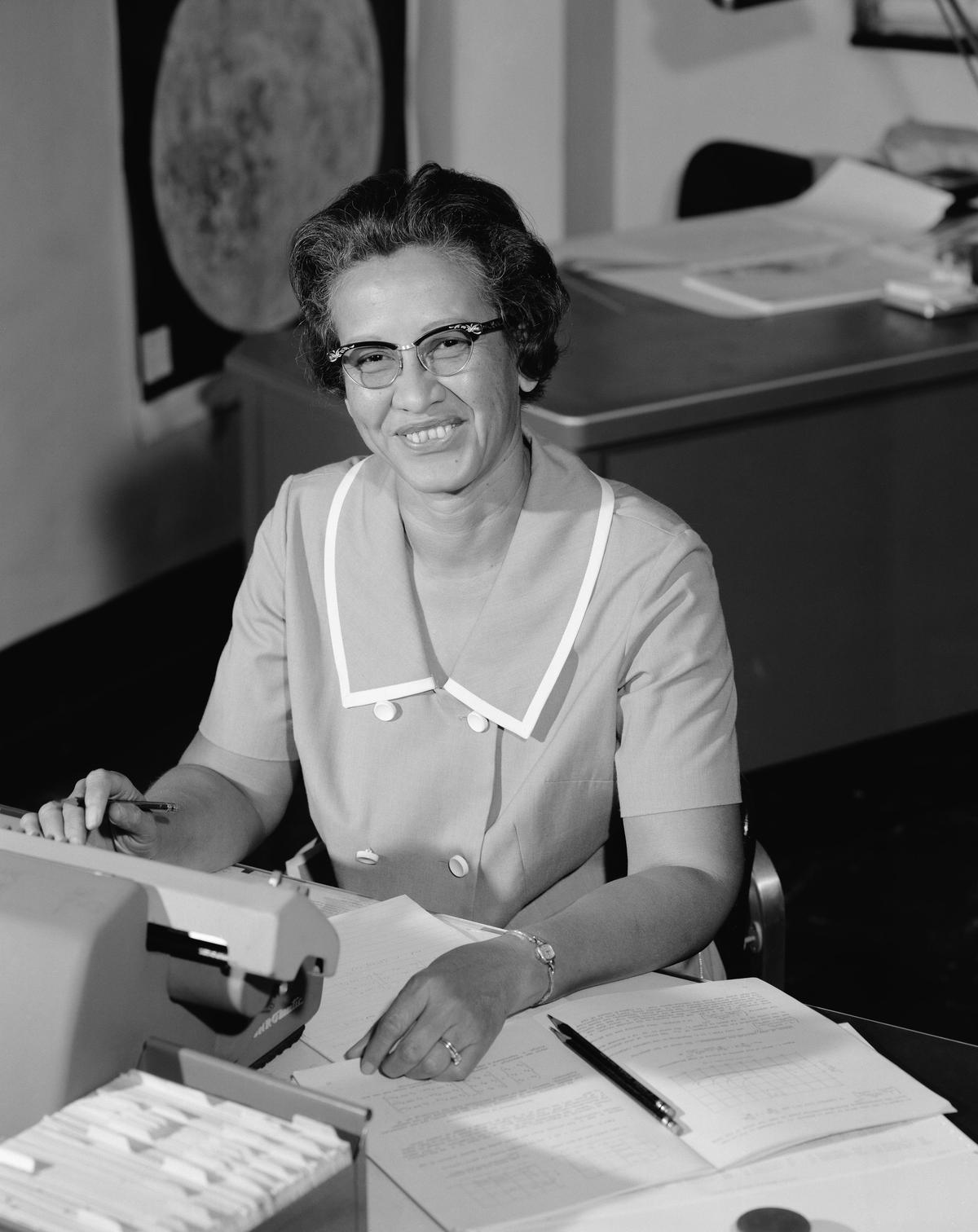
It is said that Glenn famously insisted on Katherine manually verifying the computer-generated calculations before proceeding, emphasising the trust NASA had in her abilities. Her calculations also helped the Apollo 11 mission, which landed Neil Armstrong and Buzz Aldrin on the moon.
Katherine excelled not only as a mathematician but also as a teacher and mentor. She tutored students, taught neighbourhood children piano, and continued her advocacy for the education of Black girls and other under-represented groups in mathematics and science.
Breaking the ceiling
At a time when gender, race and every other detail about a person were often used as reasons for discrimination, Katherine Johnson stands as a testament to what dedication and confidence can bring out.

Due to her gender and race, Katherine Johnson encountered numerous challenges throughout her career. She repeatedly proved her abilities and refused to accept the status quo. Although racism and sexism threatened to overshadow her contributions, her integrity and work ethic earned her enduring respect among coworkers. A significant achievement for women in STEM fields, she was the first woman in her division to receive credit as an author on a research report.
Long-term results
In the immediate aftermath of NASA’s significant accomplishments, Katherine and many other women were frequently disregarded, demonstrating both the effects of historical discrimination and the need for continued acknowledgement of marginalised voices. Her contributions gained greater recognition in later years, culminating in the Presidential Medal of Freedom in 2015 and her story being told to millions of people through the book and film adaptation “Hidden Figures”.
After working for NASA for more than thirty years, Katherine Johnson retired in 1986. Her impact went well beyond the field of mathematics. Katherine helped pave the way for generations of women and people of colour in STEM by standing up for her rights to engage, speak up, and receive recognition. On February 24, 2020, she died at the astounding age of 101.
Published – November 18, 2025 10:00 am IST
#Katherine #Johnson #NASAs #forgotten #human #computer