Unlocking the Universe: AI Discovers 1,400 Anomalous Objects in Hubble Data
In a groundbreaking development, artificial intelligence has significantly advanced our understanding of the cosmos by discovering 1,400 anomalous objects within the vast troves of data collected by the Hubble Space Telescope. This remarkable achievement not only unlocks new insights into the universe but also demonstrates the powerful capabilities of AI in astronomy, paving the way for future explorations and studies.
The Significance of Hubble’s Data
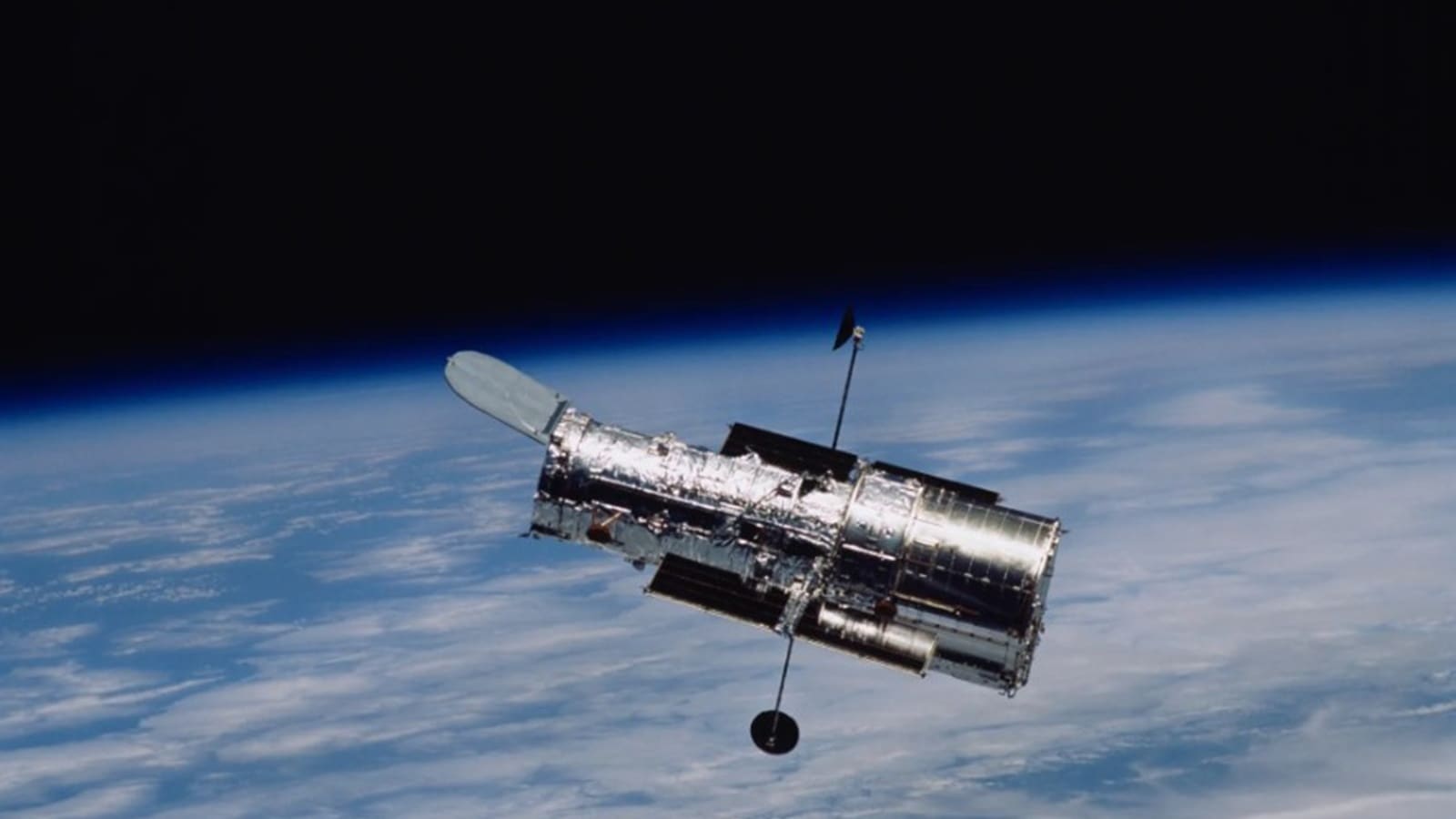
The Hubble Space Telescope has revolutionized our comprehension of the universe by providing high-resolution images and data of astronomical phenomena. Launched in 1990, Hubble has remained positioned in low Earth orbit, enabling it to capture detailed observations without the interference of Earth’s atmosphere. The telescope’s contributions span various fields, including observations of distant galaxies, nebula formations, and the study of exoplanets.
Hubble’s extensive dataset has enabled astronomers to make significant discoveries over the last three decades. However, the sheer volume of data has rendered it a daunting task for researchers to sift through and identify potentially groundbreaking findings. This is where the implementation of artificial intelligence has proven transformative.
Harnessing AI for Discovery
Artificial intelligence, particularly machine learning, has emerged as a promising solution for tackling complex problems in the scientific community. By training algorithms on vast datasets, AI can discern patterns and anomalies that might elude human researchers. In the case of Hubble’s data, AI tools have been employed to analyze images and other observations, leading to the identification of the anomalous objects that have drawn attention from astronomers worldwide.
The recent discovery of 1,400 anomalous objects not only exemplifies the prowess of AI in scientific research but also highlights its potential in accelerating the pace of discovery. With traditional methods, it could take years to analyze the data thoroughly; however, AI can process and identify anomalies within a fraction of that time.
What Are Anomalous Objects?
Anomalous objects are celestial entities that do not fit established classifications or expectations based on current astronomical knowledge. These anomalies can vary widely, ranging from unusual stellar formations to unidentified cosmic events. The importance of studying these objects lies in their potential to prompt new theories and models about the behavior of the universe.
The recent AI-driven discovery of 1,400 such objects represents a treasure trove of possibilities for researchers. As scientists delve deeper into understanding these anomalies, they may uncover new phenomena that challenge existing paradigms in astrophysics. The potential insights from these findings can reshape fields such as galaxy formation and dark matter research.
The AI Methodology
To achieve such a significant discovery, researchers implemented sophisticated AI techniques. Machine learning algorithms trained on labeled and unlabeled datasets were used to scrutinize the characteristics of different objects in Hubble’s archives. These algorithms analyzed thousands of images, seeking out unique traits and peculiar behaviors.
The process involves several crucial steps:
- Data Preparation: The first step requires preprocessing the vast amounts of data obtained from Hubble. This involves removing noise and formatting the data to render it suitable for analysis.
- Algorithm Selection: Various machine learning algorithms are selected based on their suitability for the specific type of analysis. Deep learning models, including convolutional neural networks (CNNs), are particularly effective in image recognition tasks.
- Training and Testing: The chosen algorithms are trained on a subset of labeled data, allowing them to learn the distinguishing features of known astronomical objects. After training, these models are tested against new data to evaluate their accuracy in identifying anomalies.
- Identification and Validation: Once the models have identified potential anomalous objects, further validation is conducted by astronomers to determine the authenticity of these discoveries. This step is crucial, as some anomalies may arise from sensor artifacts rather than legitimate astronomical phenomena.
- Data Refinement: The process is ongoing, with continual refinement and retraining of AI models to improve their performance and reduce false positives.
Through this meticulous approach, the AI system proved capable of unfolding a plethora of anomalous objects that had not been recognized through traditional analysis methods.
Implications for Astronomy
The discovery of 1,400 anomalous objects by AI holds profound implications for the field of astronomy. It challenges researchers to rethink previous models and hypotheses, potentially leading to groundbreaking findings in our understanding of the universe.
- Redefining Categories: The new objects may not fit neatly into established categories, prompting astronomers to devise new classifications or theories. This redefinition can lead to a more accurate understanding of cosmic phenomena.
- Collaborative Research: With AI handling the heavy lifting in data analysis, human researchers can focus their efforts on interpreting findings and developing theories. This collaborative dynamic between AI and human ingenuity can yield richer research outcomes.
- Increased Accessibility: The deployment of AI in data analysis allows for more researchers to engage with the data and contributes to democratizing astronomical research. By simplifying the process, even smaller institutions and fledgling astronomers can contribute to groundbreaking discoveries, as seen in the collaborative research models.
- Future Missions: As we look ahead to the next generation of space telescopes, lessons learned from this AI project could shape the design and functions of future instruments. New technologies could incorporate AI from the outset, enhancing data analysis capabilities.
Case Studies of Anomalous Objects
As researchers begin to explore the newly identified anomalous objects, several intriguing case studies are already emerging. Although details are still being gathered, here are a few examples that showcase the potential of these findings:
1. Unidentified Light Sources
One of the anomaly types includes sources of light previously unrecorded. These anomalous light sources might initiate inquiries into phenomena like supernovae or unique star formation events, providing insight into stellar evolution.
2. Oddly Shaped Galaxies
Another category comprises galaxies exhibiting unconventional shapes or structures. These anomalies challenge our understanding of galaxy formation processes and may offer clues about dark matter’s role in cosmic architecture.
3. Unexpected Transient Events
Transient events, such as gamma-ray bursts, are of particular interest, as their occurrence and duration can be puzzling. The newly discovered objects may include previously cataloged events undergoing rapid changes that could yield valuable insights.
The Future of AI in Astronomy
The advances made in utilizing AI to analyze Hubble’s data represent just the beginning. The future of AI in astronomy appears bright, with numerous possibilities on the horizon:
Expanding Data Analysis
As new telescopes and instruments are launched, the volume of astronomical data produced will exponentially increase. AI will be essential in processing these vast datasets efficiently, allowing researchers to focus on interpreting results rather than getting bogged down in data management. This is crucial for future studies in large-scale projects, much like those highlighted in recent economic analyses.
Multimodal Data Integration
AI can also be deployed to integrate data from different sources, such as radio telescopes, space-based observatories, and ground-based instruments. This multimodal approach can amplify our knowledge of cosmic events by providing complementary perspectives from diverse instruments.
Enhanced Predictive Models
The application of machine learning to predict celestial events could also shape the landscape of future astronomical research. By analyzing historical data, AI could identify patterns that might lead to predicting rare cosmic events, fundamentally transforming our observational strategies, similar to trends seen in modern workplace practices.
Public Engagement and Citizen Science
The newfound capacity for AI to analyze data may also mark a shift towards public engagement in astronomical research. Citizen science initiatives could harness AI technology to involve amateur astronomers in the discovery process, democratizing access to cutting-edge research.
Conclusion
Unlocking the universe through the power of AI has opened the door to unprecedented discoveries, exemplified by the identification of 1,400 anomalous objects in Hubble’s archives. This achievement underscores the transformative impact of machine learning and artificial intelligence on scientific research, particularly in the field of astronomy.
As researchers continue to investigate these anomalies using AI methods, they stand on the brink of redefining cosmic knowledge and understanding. The potential for new insights—along with the promise of collaboration between AI and human researchers—heralds a new era of exploration, where the secrets of the universe may be peered into more closely than ever before.
With each anomaly discovered, we move closer to unlocking the mysteries of our cosmos, empowering future generations of astronomers and inspiring a deeper appreciation for the grandeur of the universe.
Sources
- Hubble Space Telescope – Hubble Site
- Artificial Intelligence – Wikipedia
- Machine Learning – Wikipedia
- Dark Matter – Wikipedia
- Supernova – Wikipedia
“`
