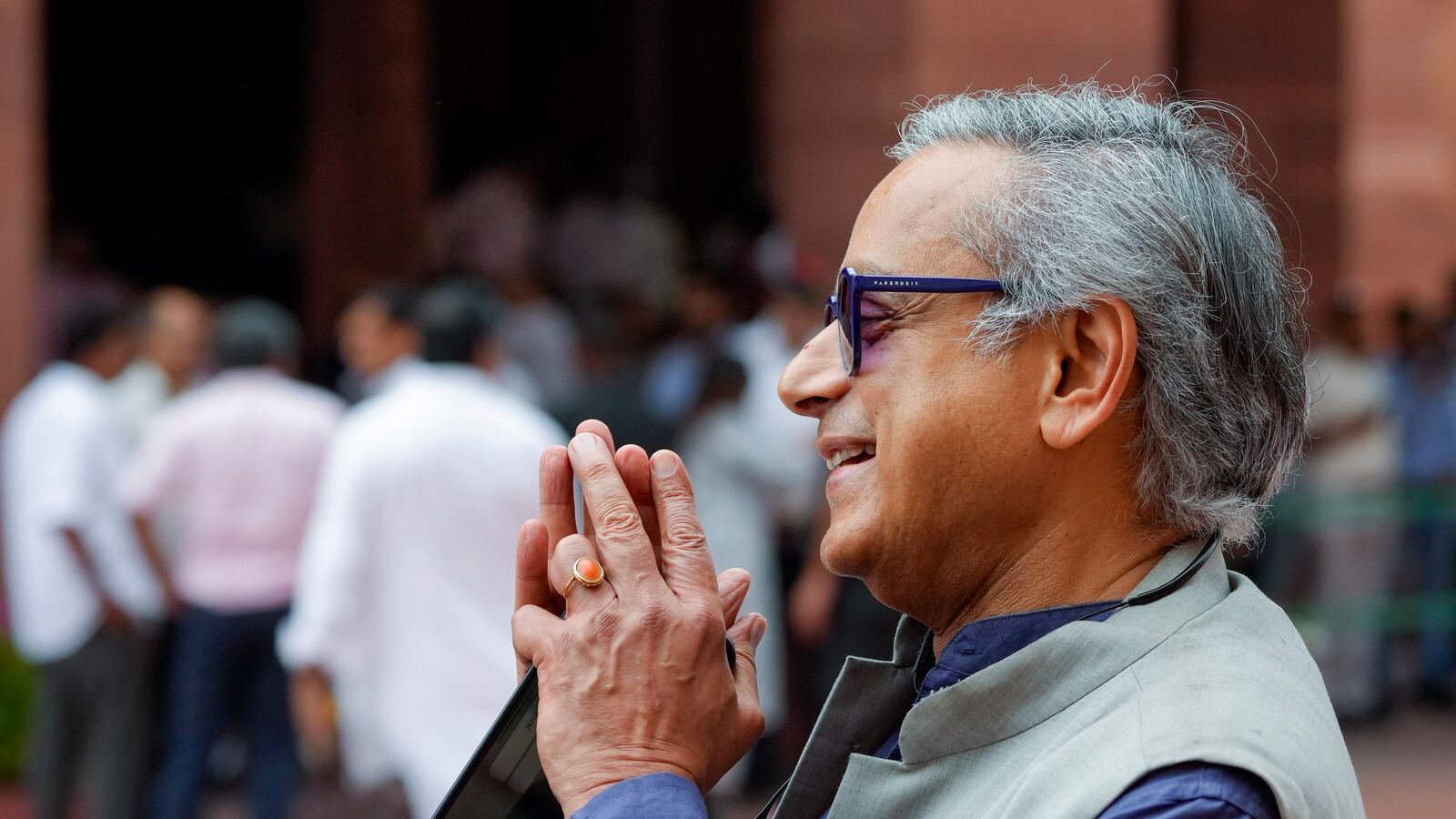
Shashi Tharoor: A Distinguished Career and Voice Within the Congress
The political landscape of India is shaped by a confluence of veteran leaders and emerging voices, with figures like **Shashi Tharoor** occupying a unique and often influential position. His journey, marked by both intellectual rigor and political engagement, offers a crucial perspective on the internal dynamics of the Indian National Congress. Discussing the concept of a Shashi Tharoor Congress snub requires first understanding the depth and breadth of his career and his role as a prominent, yet sometimes independent, voice within the party.
Before stepping into the hurly-burly of Indian electoral politics, Tharoor carved out an illustrious career spanning nearly three decades at the United Nations. His tenure saw him rise through the ranks, eventually serving as the Under-Secretary-General for Communications and Public Information. A significant highlight of his international career was his candidacy for the Secretary-General position in 2006, where he demonstrated his diplomatic acumen and global understanding on a grand stage. This extensive international experience provided him with a unique global perspective that he later brought to Indian politics, distinguishing him from many of his contemporaries.
In 2009, Shashi Tharoor transitioned from global diplomacy to domestic politics, formally joining the Indian National Congress. He successfully contested and was elected as a Member of Parliament (MP) from the Thiruvananthapuram constituency in Kerala. His consistent victories in this constituency since then underscore his deep connection with the local populace and his ability to resonate with diverse voter segments, a testament to his campaigning prowess and public appeal.
Within the parliamentary framework, Tharoor has held significant portfolios, showcasing his versatility and commitment to public service. He served as the Minister of State for External Affairs from 2009 to 2010, where his diplomatic background proved invaluable in articulating India’s foreign policy positions on the global stage. Subsequently, he took on the role of Minister of State for Human Resource Development from 2012 to 2014, focusing on critical aspects of education and national skill development. His contributions in Parliament have been consistently characterized by his articulate and well-researched debates, his incisive questioning of government policies, and his active participation across various parliamentary committees. His presence has elevated the level of discourse, making him a respected voice even among political adversaries.
Beyond his legislative duties, Shashi Tharoor’s influence is profoundly felt through his intellectual contributions. He is widely recognized as a prolific author, having penned numerous books and articles that delve into a wide array of subjects, from the intricacies of Indian history and culture to contemporary politics and international affairs. His literary works often reflect his profound understanding of complex global issues, his deep commitment to progressive values, and his nuanced perspectives on historical narratives. He is particularly celebrated for his eloquent advocacy for India’s soft power and cultural heritage on the global platform, as well as his incisive and often provocative critiques of both historical injustices and contemporary socio-political challenges. This intellectual prowess has cemented his position as a prominent public intellectual, shaping opinions and debates far beyond the confines of parliamentary sessions. His ability to articulate complex ideas with clarity and conviction makes him a significant voice in Indian political discourse and a key influencer within the Congress party’s intellectual circles, often leading to discussions around perceived instances of Shashi Tharoor Congress snub when his insights are not fully leveraged by the party.
The Dynamics of a Perceived Snub: Shashi Tharoor’s Position Within Congress
The discussion surrounding a **Shashi Tharoor Congress snub** is a recurring theme in Indian political commentary, reflecting the intricate relationship between a prominent, independent-minded leader and the established party hierarchy. Despite his significant contributions and widespread popularity, Shashi Tharoor, a consistently articulate figure within the Indian National Congress, has at times faced perceptions of being sidelined or subjected to a “snub” by the party leadership. This perceived differential treatment often arises from a confluence of factors, including his independent stance on various policy issues, his willingness to publicly express dissent or offer constructive criticism, and his proactive engagement with the broader agenda of internal party reforms.
One of the most widely cited instances that significantly fueled speculation about a Shashi Tharoor Congress snub was his decision to contest the Congress presidential election in 2022. Tharoor’s audacious bid was seen by many political observers and party members alike as a genuine attempt to foster and strengthen internal party democracy, challenging the conventional top-down approach to leadership selection. However, despite his reformist vision and the visible enthusiasm he generated among a section of the party’s rank and file, he notably received limited overt support from the party establishment. The official party machinery, in a widely acknowledged move, largely backed Mallikarjun Kharge, a veteran leader, who ultimately secured a decisive victory in the election. This outcome was widely interpreted by various media outlets and political analysts as a clear and unmistakable signal of the leadership’s preferred choice and, by extension, a significant snub to Tharoor’s ambitious reformist agenda and his aspirations for a more democratized internal process within the Congress party (The Indian Express – Kharge vs Tharoor in Congress president poll). This episode highlighted the challenges faced by those attempting to bring about fundamental changes within entrenched political structures, particularly when their vision diverges from the established norms.
Furthermore, Shashi Tharoor’s willingness to articulate views that occasionally diverge from the Congress party’s official narrative has also played a significant role in fostering this perception of a Shashi Tharoor Congress snub. His distinctly intellectual approach to political discourse and his active engagement in public debates on a multitude of policy matters, while widely appreciated by a significant segment of the public and many party workers who value nuanced discussions, have at times been viewed as implicitly challenging the established party hierarchy. For instance, his occasional yet measured praise for certain initiatives undertaken by the Modi government, even when carefully qualified and accompanied by constructive criticism, has on several occasions been met with strong disapproval and sharp reactions from some within the Congress party. This has sometimes led to accusations of him being out of sync with the official party line or, worse, undermining the party’s critical stance against the ruling dispensation (Zee News – Shashi Tharoor slammed by Congress leaders for praising PM Modi over Sainik School move). Such instances exemplify the tightrope walk that independent voices often undertake within party structures, where nuanced appreciation can be misinterpreted as disloyalty, contributing to the narrative of a Shashi Tharoor Congress snub.
The historical and enduring reliance of the Congress party on the Nehru-Gandhi family for leadership and strategic direction has also significantly contributed to this internal dynamic. While Shashi Tharoor has consistently and unequivocally affirmed his unwavering loyalty to the party and its foundational principles, his distinct independent stature and considerable appeal, particularly among the youth and urban intelligentsia, might be perceived by some traditionalists within the party as a potential, albeit unintentional, challenge to the established power dynamics within the deeply ingrained party structure. This inherent internal dynamic can sometimes lead to a perceived reluctance from elements within the party to fully utilize his extensive potential or to grant him a more central and prominent role in critical decision-making processes. The leadership often treads cautiously, balancing the need for fresh perspectives with the desire to maintain traditional control. This inherent tension between an evolving party and its historical moorings contributes significantly to the persistent narrative surrounding a Shashi Tharoor Congress snub, as individuals who operate outside the traditional power centers find their influence circumscribed.
Ultimately, the perceived **Shashi Tharoor Congress snub** is a multifaceted issue, deeply influenced by the complex interplay of internal party politics, his consistently independent and intellectual voice, and the ongoing evolution and adaptation of the Congress party itself in a rapidly changing political environment. It highlights the challenges faced by a historical party in balancing tradition with modernity, and central authority with individual autonomy, especially when dealing with high-profile members like Tharoor who command significant public attention.
Interpreting the Implications: Beyond the Perceived Snub
While the specific details of recent major public or media controversies directly stemming from a Shashi Tharoor Congress snub might not always be extensively covered or identified in readily available search results, the implications of such perceptions are significant for both Shashi Tharoor’s political trajectory and the broader strategies of the Indian National Congress. The absence of widespread negative reactions doesn’t negate the underlying dynamics that shape a leader’s standing within their party and the public’s perception of internal democracy.
The nature of Tharoor’s ‘situation’—that of a prominent leader whose intellectual contributions are highly valued but whose independent stance sometimes leads to perceived marginalization—can significantly influence the internal dynamics and future strategies of the Congress party. His continued presence, despite these perceived slights, signifies a commitment to the party, but it also underscores a tension between individual agency and party discipline. This tension is crucial for understanding how the Congress navigates its future.
One key implication is on the party’s image. When a figure of Tharoor’s stature, known for advocating for internal democracy and reform, appears to be sidelined, it can send mixed signals about the Congress’s commitment to these very principles. This might alienate a segment of the electorate, particularly the younger and more urban voters who admire Tharoor’s progressive outlook and articulate communication style. The perception of a Shashi Tharoor Congress snub could reinforce existing criticisms that the party struggles with internal democracy and succession planning, potentially impacting voter trust and enthusiasm in upcoming elections.
For Shashi Tharoor himself, the implications are equally profound. Despite the challenges, his consistent re-election from Thiruvananthapuram and his continued relevance as a public intellectual suggest that his political future is not solely dependent on party favor. He embodies a distinct brand of politics—one that prioritizes reasoned discourse, international engagement, and liberal values. Even if a perceived Shashi Tharoor Congress snub limits his formal roles within the party hierarchy, his influence as a thought leader and public voice remains robust. He continues to shape public opinion through his writings, speeches, and social media presence, reaching audiences that extend beyond traditional party loyalties. His resilience in navigating these internal party dynamics showcases his commitment to his ideals and his continued belief in the Congress’s potential, even while pushing for its necessary reforms.
Furthermore, the way the Congress leadership manages figures like Tharoor—their integration or perceived exclusion—speaks volumes about the party’s future strategic direction. Will it embrace diverse voices and internal challenges as signs of vitality, or will it prioritize rigid adherence to a central command structure? How the party handles the intellectual capital and popular appeal of leaders like Tharoor will be critical in its efforts to rejuvenate itself and mount an effective challenge to the dominant political narrative in India. The narrative of a Shashi Tharoor Congress snub thus becomes a litmus test for the party’s adaptability and its vision for inclusive leadership in a complex democratic setup.
Shashi Tharoor’s Enduring Relevance in India’s Evolving Political Landscape
Shashi Tharoor’s political journey offers a nuanced and compelling lens through which to examine the constantly evolving political landscape of India. As a prominent figure within the Indian National Congress, Tharoor often embodies the liberal, intellectual face of a party that is increasingly grappling with profound shifts in voter demographics, the formidable rise of a strong right-wing narrative, and the complex challenges of national unity in a diverse subcontinent. His political career, marked by both remarkable electoral success and persistent internal party challenges—including the recurrent discussions around a Shashi Tharoor Congress snub—mirrors the broader struggles, adaptations, and existential questions faced by India’s older and more established political establishments (The Indian Express – Shashi Tharoor: The man, the message and the future of Congress).
Tharoor’s exceptional ability to connect with a vastly diverse electorate, an impressive feat considering his elite educational background and extensive international career, speaks volumes about a significant segment of the Indian populace that increasingly values articulate, well-educated, and globally aware leadership. His consistent emphasis on modern governance practices, the protection and promotion of human rights, and the vision of a globally integrated India starkly contrasts with more traditional or religiously driven political discourses that have gained significant traction in recent years (The Diplomat – Shashi Tharoor Is India’s Most Interesting Politician). This appeal highlights a growing desire among certain voter groups for a progressive, forward-looking political narrative that transcends conventional identity politics.
However, Tharoor’s experiences, particularly those leading to the perception of a Shashi Tharoor Congress snub, also critically illuminate the intricate and often fraught internal dynamics of political parties in India. These dynamics are where individual ambition, ideological alignment, and the pursuit of reform frequently clash with deeply entrenched organizational structures, established leadership hierarchies, and traditional modes of operation. His struggles to implement comprehensive internal reforms within the Congress party, despite his fervent advocacy, underscore the inherent resistance to change that often characterizes large, historical political organizations.
Ultimately, Shashi Tharoor’s compelling narrative is deeply intertwined with the larger, ongoing story of Indian democracy itself. It is a story of continuous negotiation and delicate balance between tradition and modernity, between fiercely guarded regional identities and overarching national aspirations, and the enduring, complex challenge of maintaining a pluralistic and inclusive society amidst a spectrum of diverse and often conflicting political ideologies. His continued prominent presence and undeniable influence, even in the face of perceived setbacks or a Shashi Tharoor Congress snub, underscore the ongoing relevance and critical importance of reasoned discourse, intellectual engagement, and a commitment to liberal values in shaping India’s future political direction. He serves as a powerful reminder that even within established party structures, there remains space for independent thought and advocacy, vital for the health and dynamism of a vibrant democracy.
Sources
- The Indian Express – Kharge vs Tharoor in Congress president poll
- The Indian Express – Shashi Tharoor: The man, the message and the future of Congress
- The Diplomat – Shashi Tharoor Is India’s Most Interesting Politician
- Zee News – Shashi Tharoor slammed by Congress leaders for praising PM Modi over Sainik School move
