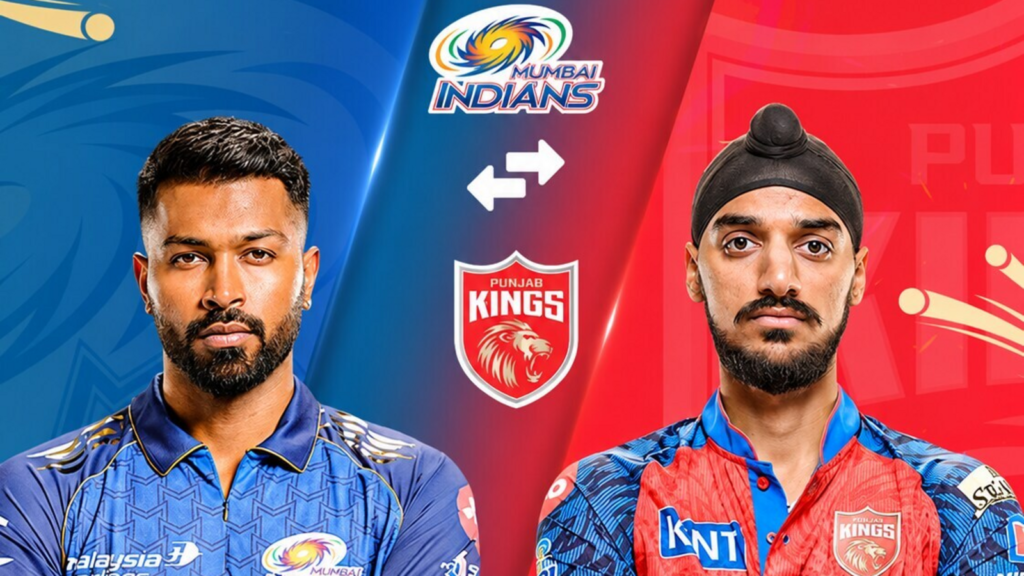
Is Flamboyant all-rounder Hardik Pandya moved to Punjab Kings from Mumbai Indians in exchange of Arshdeep Singh, thus completing the biggest and most high-profile trade in the history of Indian Premier League (IPL). While Pandya hikes his fee to ₹18 crore from ₹16.35 crore for his Punjab Kings move, Arshdeep went to Mumbai Indians at an unchanged price tag of ₹18 crore, the IPL said in a statement.
Before this, Rishabh Pant took a pay-cut of ₹12 crore to return to Delhi Capitals from Lucknow Super Giants earlier this year. Earlier, Chennai Super Kings (CSK) had acquired Sanju Samson this year for ₹18 crore from Rajasthan Royals, who got Ravindra Jadeja for ₹14 crore and Sam Curran for ₹2.4 crore from CSK.
The first-ever trade in IPL history took place in 2009 when Mumbai Indians traded Ashish Nehra to Delhi Daredevils (now Delhi Capitals) in exchange for Shikhar Dhawan. Nehra is currently the head coach of Gujarat Titans.
How does an IPL trade process happen?
It all starts formally with an Expression of Interest (EOI) to the BCCI from the buying franchise. Once the EOI is submitted to the BCCI, the selling franchise has 48 hours to respond whether they are willing to make the player available for the trade.
If selling franchise makes the player available, then that cricketer is asked to sign a form provided by the BCCI to indicate his consent. “Provided an EOI Confirmation is sent within the above-mentioned 48 hour window, then the player shall be asked to confirm if he wishes to be traded by signing a form to be provided by the BCCI (a “Consent Form”),” the IPL trading rules say, as reported by Cricbuzz.
The IPL trade regulations also allow the said player a percentage of any increase in his annual fee negotiated between the two franchises. Pandya got a hike of ₹1.65 crore. “The Consent Form shall specify the percentage of any increase in the annual League Fee to be negotiated as part of the trade (the “Negotiated Increase”) which shall be paid to the Player (the “Player Percentage”),” the rules further state.
Is fitness a part of consideration in IPL trade?
Fitness is also a part of the regulations addressed in the trade rules and regulations. Pandya, for his part has not played any competitive cricket since IPL 2026, and is currently at the BCCI’s Centre of Excellence (CoE), recovering from a right tibial bone stress injury (shin bone stress response without a structural fracture).
According to the IPL trade regulations, the buying franchise must ensure that the player being traded is match-fit during the exchange. “It is the responsibility of the buying Franchisee to ensure that the Player being traded is match fit at the time of the trade. It may require that the Player undergoes a medical examination in advance of the signing of the documents referred to above,” it states.
The terms of player’s new contract is also another important aspect. While filling up the consent form, the player will unconditionally agree to a new Player Contract with the franchise where he is going for his original fee plus the agreed Player Percentage if any negotiated increase between the buying and selling franchises.
The selling franchise will also have to unconditionally agree to release the player from his existing contract in return for the agreed Franchisee Percentage of the Negotiated Increase.”
#IPL #trades #explained #deals #work #players #consent #trade