I first encountered Raajadharshini’s work while doing what most of us do in quiet off-hours: finding inspiration in the depths of Instagram. An image of a woman stood framed against a lush mountain backdrop, balancing a section of honeycomb atop her head like an unpolished crown, stopped me mid-scroll. The shoot led me to Raajadharshini’s page, a Central Saint Martins graduate whose documentary-fashion hybrid style I’ve long admired.
That photograph was part of the Indian chapter of Guerlain’s global Women for Bees initiative, a partnership with UNESCO and the Nilgiris-based Keystone Foundation. Later, as I spoke to Raaj to learn more about the project, she gave me the backstory of the image shot at Nilgiri Biosphere Reserve. “She [the woman balancing the honeycomb] was telling me how she feels when she opens the bee box — like the rani of the bee box,” Raaj told me. “So I said, ‘I need to make you look like it,’ and we used the combs to create that image.”
Newfound sense of independence
For Guerlain, the French house of luxury perfumery and cosmetics, the connection to bees is a long one — a 170-year-old lineage tracing back to 1853 to be precise, when Pierre-François-Pascal Guerlain designed the iconic gilded Bee Bottle for Empress Eugénie. But the relationship to the winged insects extends beyond the brand’s legacy symbolism. Launched five years ago, the Women for Bees programme (to protect bees) has already spanned nine countries, ranging from Cambodia and Peru to Rwanda, China, and France. Over the last half-decade, the initiative has trained more than 250 women in the art of bee-keeping, installed upwards of 3,500 hives, and safeguarded at least eight endemic bee species in their native habitats.
Guerlain’s Women for Bees project
| Video Credit:
The Hindu
“Our food security depends on bees,” emphasised Global Sustainability Director at Guerlain, Claire Coletti, as we jumped on a call. “If there are no bees anymore, our food system will collapse. In parts of China, where bees have disappeared, people are pollinating fruit trees hand-by-hand with q-tips. We simply cannot compete with bees.”
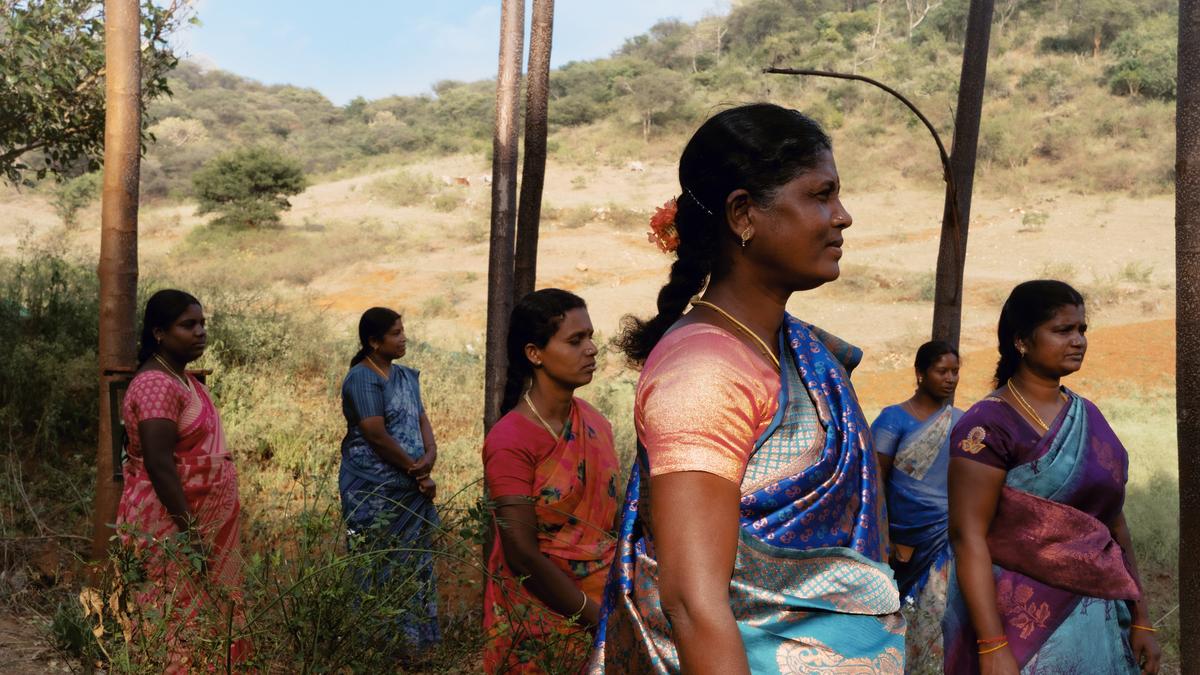
In the Nilgiris, a UNESCO-protected biological hotspot sitting at the junction of the Western and Eastern Ghats, traditional honey collection was historically called ‘honey hunting’. It was dangerous, strenuous work reserved almost exclusively for men who climbed tall cliffs and trees. The Women for Bees project introduces managed box hives for native Asian honeybees (Apis cerana), allowing women to cultivate honey safely around their homes while boosting local ecological resilience.

What makes this chapter so singular is the emotional texture of the community. Through my conversations with Coletti and Raaj, I learned that many of these women spend their early mornings picking jasmine before gathering for tea in the afternoons. “We have some beekeepers who tell us the bees are like their daughters,” Coletti shared. “It’s about taking care of a living being. Before, they met for tea with no real shared focus. Now, they exchange tips on hive care, support each other’s independent businesses, and feel a newfound sense of independence.”
To strengthen this network, Guerlain is even launching a tailored mobile app specifically for Indian beekeepers to share real-time advice and troubleshoot seasonal challenges, like protecting hives from heavy rain and wind, which bees notoriously detest.

Never an extractive process
Bringing these nuanced human stories to light required a visual storyteller who understood the terrain organically. Enter Raajadharshini, whose father, a geologist, used to make her handmade leaf-identification books filled with Nilgiri flora when she was a child. Her approach to photography is fiercely empathetic. “It [photography] can sometimes feel like an extractive process if you just take photos and leave,” Raaj reflected in our conversation. “My process is about going there to see if they have something they [the communities] want the world to know, and then bringing that vision to life together. I want them to feel represented with dignity, to have pictures they want to frame and keep in their houses.”
This grounded, deeply collaborative approach is palpable in a Raajadharshini image. In an earlier personal project documenting women seaweed farmers in Rameswaram, whom she hunted down on a rented Scooty with her sister after spotting a brief mention in a newspaper clipping, she spent days wading into the rocky ocean bed alongside them. Noticing the sharp cuts on their feet from the coral and stone, she refused to let the interaction remain purely of photographer and subject. Returning from the shoot, she organised a fundraiser to supply 60 pairs of protective footwear to the divers and is currently researching ways to help build a clean drinking water space for their village.

Whether capturing artisans at the Chanakya School of Craft for Dior or documenting coastal divers in Tamil Nadu, her lens consistently bypasses the tired tropes of “poverty porn”, choosing instead to highlight skill, everyday joy, and agency. With the women and their bees in the Nilgiris, her immersion was similarly immediate and tactile.
On her first day in the village, the women welcomed her into their kitchens, poured hot tea, and invited her to a family wedding, she laughs. When Raaj eschewed bulky protective gear to get closer visual focus and predictably got stung on her hands, the women immediately rushed to her side. “They took a crushed, sweet-smelling leaf and rubbed it over my hand so the other bees wouldn’t smell the sting and attack me,” she shares.
Subverting the standard
Beyond the warmth, both Raaj and Claire noted the shadow of environmental change hovering over the hills. The Nilgiris are noticeably warmer today than in years past, affecting flower blooms and making bee colonies vulnerable to sudden climate-induced diseases. In response, phase two of the project focuses on planting native flowering corridors and expanding training so that initial participants become trainers themselves.
Looking at Raaj’s images — a woman standing in a dense field of wild vegetables and flowers, another tenderly inspecting a hive frame — I am struck by how completely they subvert the standard ‘development’ gaze. There are no tropes of helplessness here; only skill, sisterhood, and deep environmental stewardship.
In empowering women to nurture these tiny, essential creatures, the project reminds us that real sustainability isn’t an abstract corporate mandate. It is, funnily enough, built on tea shared in village kitchens, ancient wisdom of the land and its flowers, and the quiet dignity of caring for what we call home.
Published – October 06, 2026 03:35 pm IST
#Raajadharshini #captured #queen #bees #Nilgiris
