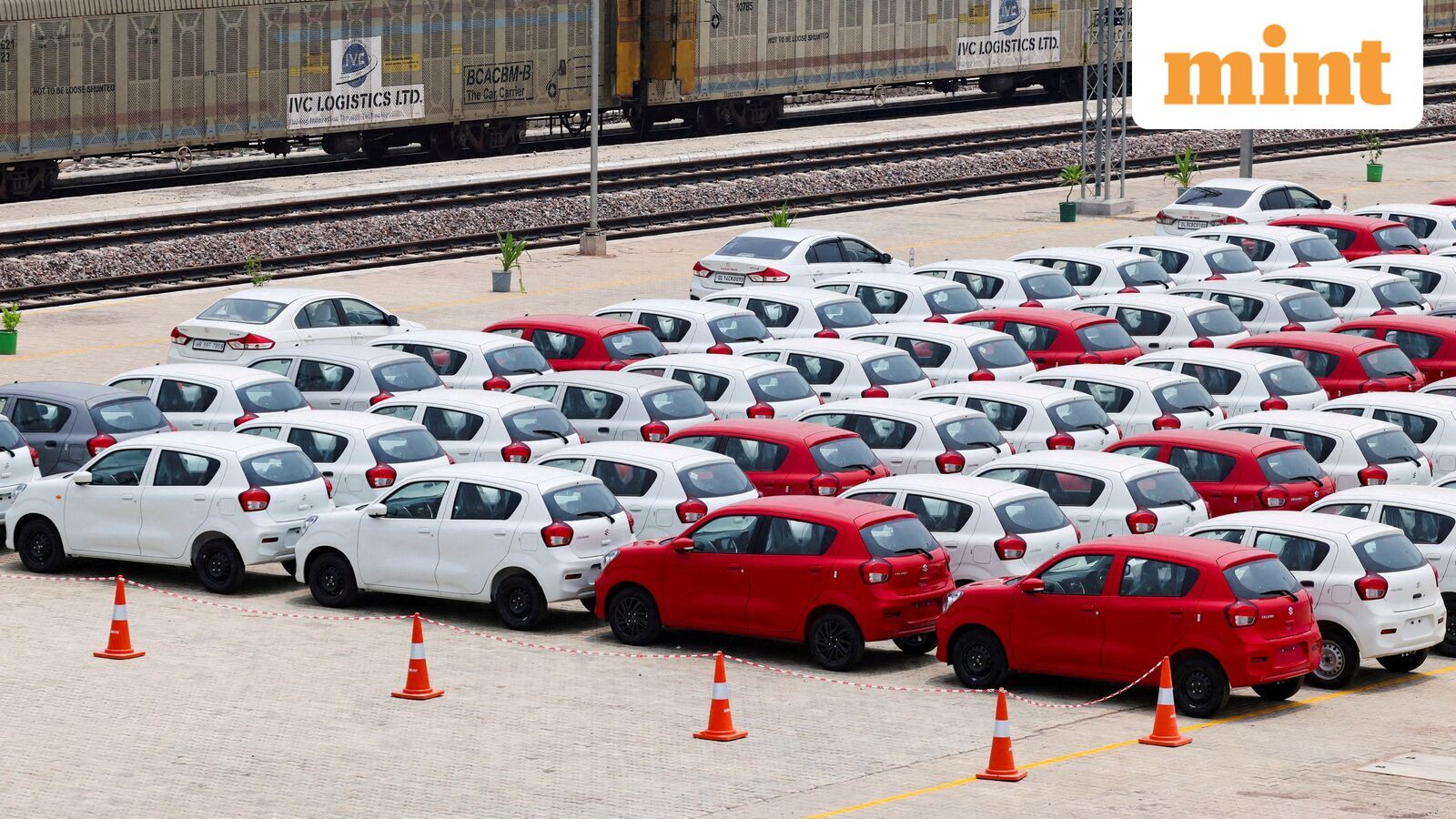
India’s largest carmaker, Maruti Suzuki India Ltd, is prioritizing the production of small cars like the Alto and Spresso, even if it means cutting output of bigger models, as it believes there is still growth potential for them in the world’s third-largest automobile market.
The New Delhi-based carmaker said on Thursday that mini cars like the Alto and Spresso are showing strong growth, with sales nearly doubling in December. The company is ramping up production of these vehicles to meet retail bookings, buoyed by recent goods and services tax (GST) cuts.
Dispatches of mini cars to dealers in December increased by 92% year-on-year to 14,225, lifting Maruti’s total domestic sales by 36% to 192,115 units in the month. Larger utility vehicle portfolio grew at the pace of 33% on-year, reaching 73,818.
The production of mini cars is being slowly ramped up, which is reflected in the December sales numbers, following wholesale data for October and November that showed a tepid performance, according to a top executive.
“There were many questions as to why this segment is not growing. I would like to clarify that these are the wholesale numbers. We were doing pretty well with the retail numbers in the past two months,” Partho Banerjee, senior executive officer-marketing and sales, said during a press briefing on Thursday.
Banerjee added that as the company rushes to get such small cars to the dealers, it has to sacrifice production of some other models from segments like compact vehicles due to limited capacity.
“If we are producing more small cars, we have to sacrifice some other models. So, in order to serve our customers on a turn-by-turn basis, we are trying to produce the models, and we are delivering them to customers,” Banerjee said.
To be sure, Maruti Suzuki has a production capacity of 2.6 million passenger vehicles annually across four facilities in Haryana’s Gurugram and Manesar and Gujarat’s Hansalpur and Kharghoda.
Maruti, which had offered steep discounts since early September in addition to GST cuts as part of its strategic pricing, is now considering whether to continue with such prices, as demand for its cars has picked up in recent months.
“We will soon make a decision,” Banerjee told reporters.
Falling demand
The spotlight has been on the mini car segment since the GST rate rationalization, as demand had been declining over the past few years with consumers shifting to sports utility vehicles (SUVs). Since 2019, SUVs have grown from one in five cars on Indian roads to one in two, while small cars have suffered.
Questions about whether the GST cut can revive the mini car segment grew particularly after the release of October and November data by the industry’s premier lobby group, the Society of Indian Automobile Manufacturers (Siam), on //date//.
In October-November, Siam data showed, mini cars cumulatively grew just 3% on-year to 22,415 units, compared to 17% (to 207,180 units) for compact SUVs of less than four metres in length.
While December saw strong growth, mini cars still face a steep climb to recovery, having been hit the hardest over the past few years. Between April and December, Maruti recorded a 15% decline in mini car sales, down to 76,044 units, even as the compact hatchback and utility vehicle segments continued to grow.
However, Maruti’s management is confident that there is still room for growth in the segment. “We have pending bookings of more than 1.5 months, despite seeing growth in sales. This month, sales doubled, yet the backlog for mini segment vehicles remains around 1.5 months,” Banerjee said.
Debates on the prospects of the mini car segment have also gained attention due to an ongoing discussion among carmakers on whether cars weighing less than 909 kg should receive special relief under the upcoming emission norms. Notably, all mini cars fall below this weight threshold.
While carmakers like Tata Motors, Mahindra and Mahindra, and Hyundai Motor India have been opposed to any such weight-based relief, Maruti has consistently argued that small cars deserve special exemption; otherwise, it would be difficult for them to remain viable in the Indian market.
GST boost
Analysts have previously explained that there is still some hope left for the segment as growth in the post-GST cuts period will evolve in phases.
Puneet Gupta, director at market analytics firm S&P Global Mobility, explained earlier that industry growth will unfold in phases, with the current momentum driven largely by buyers who were already active in the market.
These consumers have now upgraded, gravitating decisively towards sub-compact and compact SUVs.
“From April-May 2026, however, entry-level and mini cars could witness a revival, provided consumers see meaningful prices associated with the segment. The comeback of this segment will hinge on the intensity of OEM (Original Equipment Manufacturer) commitment to reignite demand,” Gupta said, adding that Maruti Suzuki will play a decisive role in this shift.
#Maruti #Suzuki #prioritizes #mini #cars #bigger #models