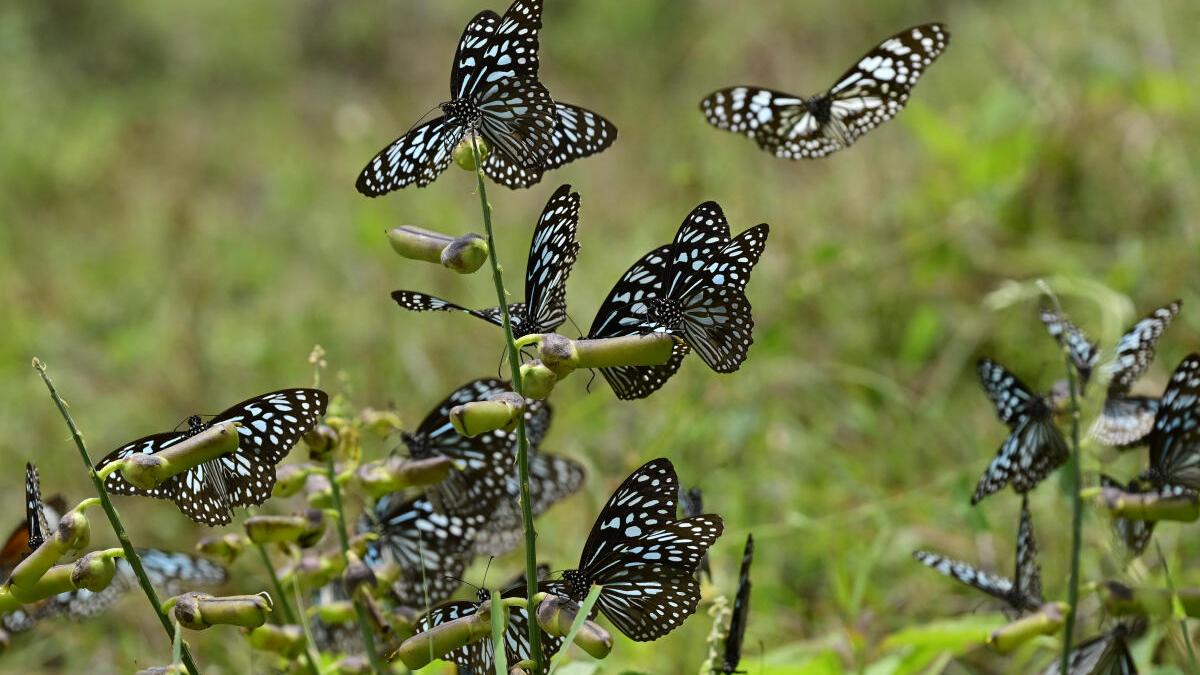
The impact of climate change and other human activities on biodiversity may be common knowledge. But, to truly understand the extent and magnitude of biodiversity loss, we need good data, believes evolutionary biologist and biodiversity scientist at the National Centre for Biological Sciences, Dr Krushnamegh Kunte, the founder and chief editor of the Butterflies of India website and the Biodiversity Atlas India, a species-based bioinformatics platform that drives the website.
“Anyone can make an informal statement claiming they don’t see as many butterflies around as they did as children, and therefore butterfly populations are declining. But as scientists, we cannot make a firm statement of actual trends without actual solid data.”
To help gather better data on Indian butterflies, Kunte has collaborated with Nature’s Ark to develop two mobile Android apps, iButterfly Explorer and iBiodiversity Count. These apps are specifically targeted at Indian butterflies, says Kannan AS, co-founder of Nature’s Ark, a platform that seeks to bridge the gap between cutting-edge technologies and organisations committed to climate adaptation and biodiversity conservation.
While he agrees that there are other apps that can help with identification and recording, “the accuracy that you get here is significantly higher,” he insists, explaining that the entire dataset used to train the AI for the iButterfly Explorer app was taken from the IFB website, which has been curated by Kunte and his team. “We collected the existing data and trained the model from there. This is the first Indian mobile app that identifies any Indian fauna with AI,” says Kannan.
Also read: India’s butterfly boom: How Nature walks, parks, and trails are sparking a new conservation movement
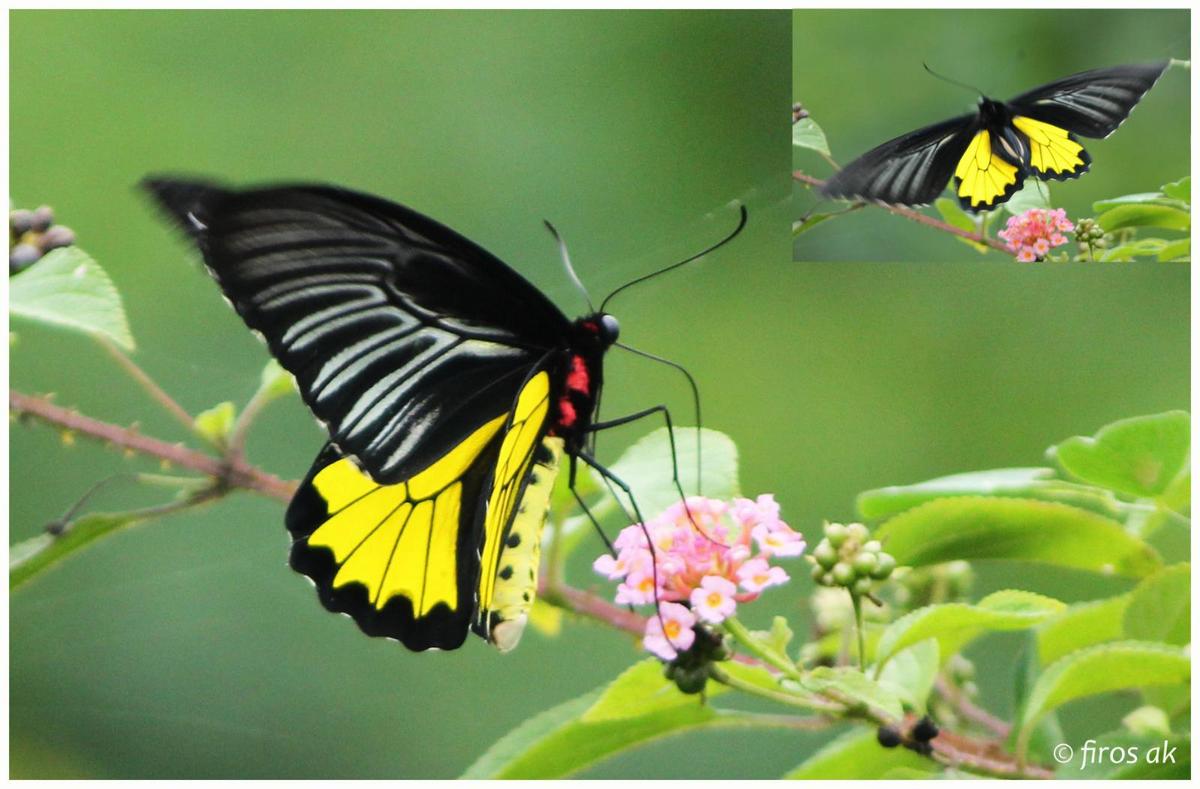
The app also provides additional information about a butterfly for enthusiasts and scientists, including its physical traits, both as an adult and as a caterpillar, the specific plants the caterpillar feeds on, and where these butterflies are usually found.
| Photo Credit:
Special Arrangement
According to Kunte, the website, which was launched in 2010, publishes images on its citizen science platform only after they have been peer-reviewed. “That made it much more reliable as every single observation has been looked at by at least two or three seasoned butterfly experts, either an experienced butterfly watcher or scientist,” he explains.
It is because of this, he adds that they “are fairly certain of the identity. We had to train the algorithm a little more for these curated apps and add some additional data, but 16 years of work have gone into them.” Kannan also emphasises the importance of the quality of the content used to train the AI tools: “This curated content is fundamental to the AI working well; I think we are 90-91% accurate because of this content.”

Mythily Ramesh of Next Wealth, which supported the project with Krushnamegh Kunte and Nature’s Ark co-founders KannanA. S and Poornima Kannan
| Photo Credit:
Special Arrangement
Also read: A new field guide spotlights Delhi’s marvellous bat diversity
While the iButterfly Explorer app offers AI-assisted species identification, the iBiodiversity Count enables users to record field data on species occurrences and populations. In the case of the Explorer app, all one needs is a decent photograph, which can be taken directly, uploaded from one’s phone, or shared from a WhatsApp group. “The app identifies it, using the training it has had,” says Kunte. Identification, however, is only one part of its function. “The second major part is the information on the various species, once you get a prediction from the AI model.”
The app also provides additional information about a butterfly for enthusiasts and scientists, including its physical traits, both as an adult and as a caterpillar, the specific plants the caterpillar feeds on, and where these butterflies are usually found.
“This way, users actually learn something, beyond knowing just the name of a butterfly,” he says, adding that this is a comprehensive app for both beginners as well as for more advanced amateurs and specialists. “This app is not only intended for naturalists and beginners who want to learn more about butterflies; we are hoping that it will also be used by educators. It will be wonderful if teachers can take children to a nearby garden and help them understand butterflies better using the information in the app.”
Also read:A peek into the secret lives of Coorg’s many frogs
The iBiodiversity Count app, on the other hand, helps users organise their observations. “Historically, when naturalists go to the field, they come back and prepare a daily checklist; we wanted to create an app which would help people organise these real-time observations.”
While the app can currently record multiple observations, it is focused only on butterflies; he hopes that eventually it can also be used to record sightings of other biodiversity, including moths, dragonflies, and damselflies. “The species checklists are taken from our websites, and we keep them updated,” he says.

A screenshot of the iButterfly Explorer app
| Photo Credit:
Special Arrangement
But the app does more than that. It also helps address a key concern that scientists like Kunte have: generating high-quality data for research to test hypotheses, for instance, about declining butterfly populations. “What we would like to do is to make it available to everyone. If someone wants to do a thorough analysis of populations of butterflies over a long period, they can write to the trust and request access to the data,” says Kunte, who also wants to ensure people who collect the data get recognition as well.
“What happens on platforms such as iNaturalist is that anybody can download the data, and they’re not obliged to give credit to people who have collected the data, which could be disheartening. In general, it is a nice thing to give acknowledgement to individuals who have collected data on which scientific publications are based.”

The next app will be focused on Odonata, a group of flying insects that include dragonflies and damselflies
| Photo Credit:
SUSHIL KUMAR VERMA
The team is also working on two other apps, iMoth Explorer and iOdonata Explorer, which are scheduled for release later this year. “Those two apps are in the making and will work the same way as the iButterfly Explorer app. The idea is the same: to help people appreciate what species we have, what biodiversity we have, their biology, the threats that they face in the modern world and so on,” says Kunte.
Published – June 24, 2026 01:10 pm IST
#apps #identify #record #Indian #butterflies #launched
