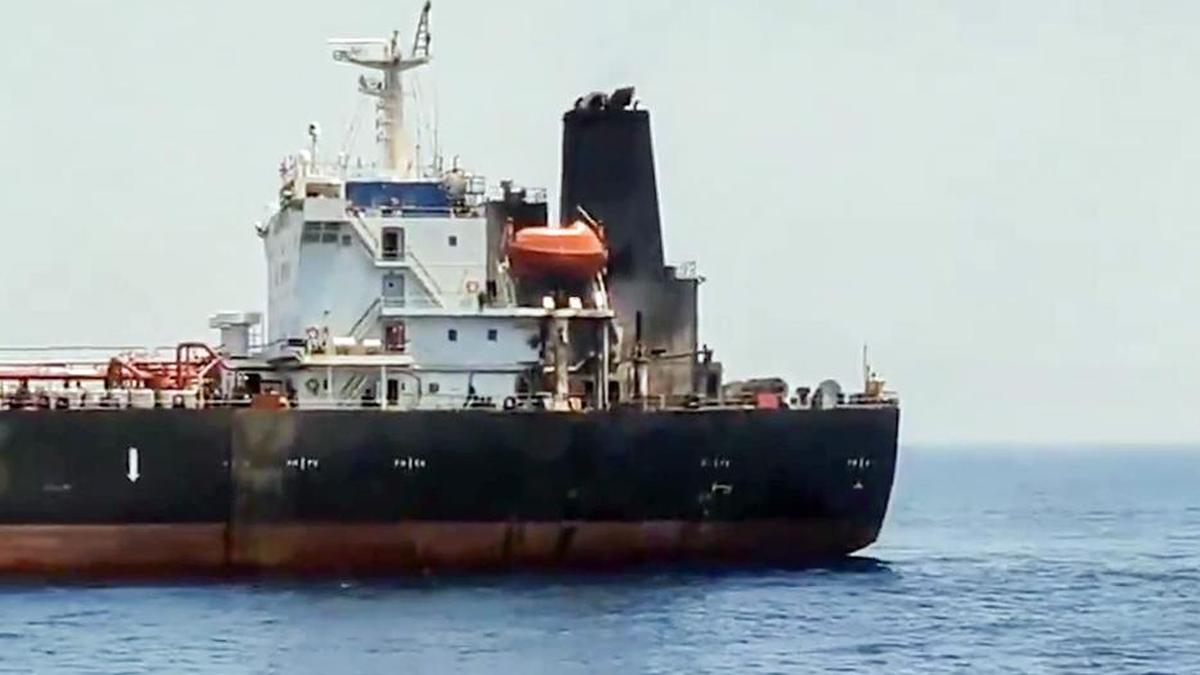
The deaths of Indian seafarers Aditya Sharma, Shivanand Chaurashiya and Patnala Suresh aboard Settebello are a stark reminder of the risks borne by those who sustain global commerce. While geopolitical tensions dominate headlines, the human cost is frequently carried by civilian merchant mariners navigating the world’s most dangerous maritime corridors.

In the aftermath of recent attacks on merchant vessels, debate has emerged within maritime circles over the role of so-called “sanctioned vessels” — much of it marked by misunderstanding and oversimplification.
A sanctioned vessel is one designated under an economic, trade or security sanctions regime imposed by a government or international organisation. Such sanctions may originate from the UN Security Council, the United States, the European Union, the United Kingdom or other national authorities.
Vessels may be sanctioned due to their ownership, involvement in prohibited trade, restricted cargo, links to terrorism, or participation in sanctions-evasion practices such as deceptive shipping and unauthorised ship-to-ship transfers.
Yet sanctions are not universally applicable. A vessel sanctioned by one country is not automatically sanctioned everywhere. Unless restrictions arise from a binding UN Security Council resolution, unilateral sanctions generally apply only within the jurisdiction of the imposing country and to entities subject to its laws. A vessel sanctioned by the U.S. Office of Foreign Assets Control, for instance, does not automatically become illegal under Indian law.

Nor does a sanctioned vessel cease to be a merchant ship. Unless its registration is withdrawn, it is detained, or its flag State takes specific action, it may continue operating internationally. Such vessels often face port access restrictions, insurance challenges, banking limitations and heightened regulatory scrutiny — but they do not simply vanish from global trade routes.
The larger issue, however, is not the legal status of individual ships. It is the safety of seafarers operating in regions where commercial shipping has become entangled in geopolitical conflict.
Industry expectations
The maritime community expects India to adopt a stronger, more proactive posture. Attacks on merchant shipping and civilian seafarers, irrespective of nationality, should be unequivocally condemned. India continues to advocate adherence to international maritime law and freedom of navigation while raising concerns at multilateral forums, including the UN, the International Maritime Organization and regional maritime-security platforms.

Diplomatic engagement alone may not suffice. India must work closely with flag States, shipowners and operators to ensure appropriate security measures for vessels transiting high-risk areas. Indian seafarers should not be compelled to sail through war-risk zones without full disclosure of the risks and their informed consent.
There is growing expectation that India will strengthen its maritime-security posture in the region. Enhanced naval deployments, expanded Coast Guard surveillance, rapid-response capabilities and preparedness for hostage-rescue or evacuation operations would reassure the thousands of Indian seafarers serving aboard international vessels. Timely dissemination of actionable intelligence and regular threat assessments to shipowners and operators is equally important.
The welfare dimension of maritime crises often receives less attention than security concerns. Families of seafarers frequently depend on fragmented information and rumours during emergencies.

Establishing dedicated contact points, providing verified updates and offering psychological and logistical support to affected families should form an integral component of any crisis-management framework. The industry has also argued that seafarers who decline assignments in declared war-risk areas should not face professional penalties. Existing contractual protections, war-risk compensation provisions and insurance mechanisms must be fully honoured. Enhanced war-risk allowances and adequate insurance cover, negotiated with Protection and Indemnity Clubs and hull-and-machinery underwriters, have become increasingly necessary as maritime threats evolve.
Banning no solution
The question of whether Indian seafarers should be prohibited from serving on vessels transiting the Strait of Hormuz has surfaced repeatedly. A blanket ban, however, is neither the primary demand of the maritime industry nor a practical solution.

The Strait of Hormuz remains one of the world’s most critical maritime chokepoints, handling a substantial share of global energy trade. Thousands of Indian seafarers earn their livelihoods aboard vessels that routinely transit the region without incident. A comprehensive prohibition could have significant consequences for employment, global supply chains and India’s standing as one of the world’s leading suppliers of maritime manpower.
What the industry seeks is a calibrated, evidence-based approach. Periodic risk assessments, clear advisories, mandatory informed consent for deployment in high-risk areas and enhanced security protocols are widely viewed as preferable to outright restrictions. Should the threat environment deteriorate significantly, temporary advisories against joining certain vessels or routes may become necessary — but the objective should remain protecting seafarers without unnecessarily undermining their employment opportunities.
An equally important question concerns regulatory authority. Can India’s maritime regulator prohibit seafarers from joining such voyages, or does that authority lie elsewhere?
Also read | Where Silence Has Weight: Life beneath the ocean
The Directorate General of Maritime Affairs (DGMA) exercises regulatory oversight over merchant shipping and seafarer certification. However, its jurisdiction is primarily linked to Indian-flagged vessels. The Ministry of External Affairs, on the other hand, holds authority over Indian citizens abroad, diplomatic engagement and travel advisories.
It can influence maritime-security policy through diplomatic channels and, where necessary, through measures affecting international travel.
Any meaningful restriction on Indian seafarers joining high-risk voyages would require coordinated action across multiple ministries — Ports, Shipping and Waterways; External Affairs; and Labour.
India would benefit from an inter-ministerial maritime-security framework capable of escalating measures in proportion to the threat environment — one that brings together maritime regulators, foreign-policy officials, defence agencies, intelligence organisations, shipowners’ associations and seafarers’ unions to facilitate real-time decision-making.
(The writer is Deputy Director General of Shipping. Views are personal)
Published – June 14, 2026 06:37 am IST
#Indian #seafarers #safety #stake
